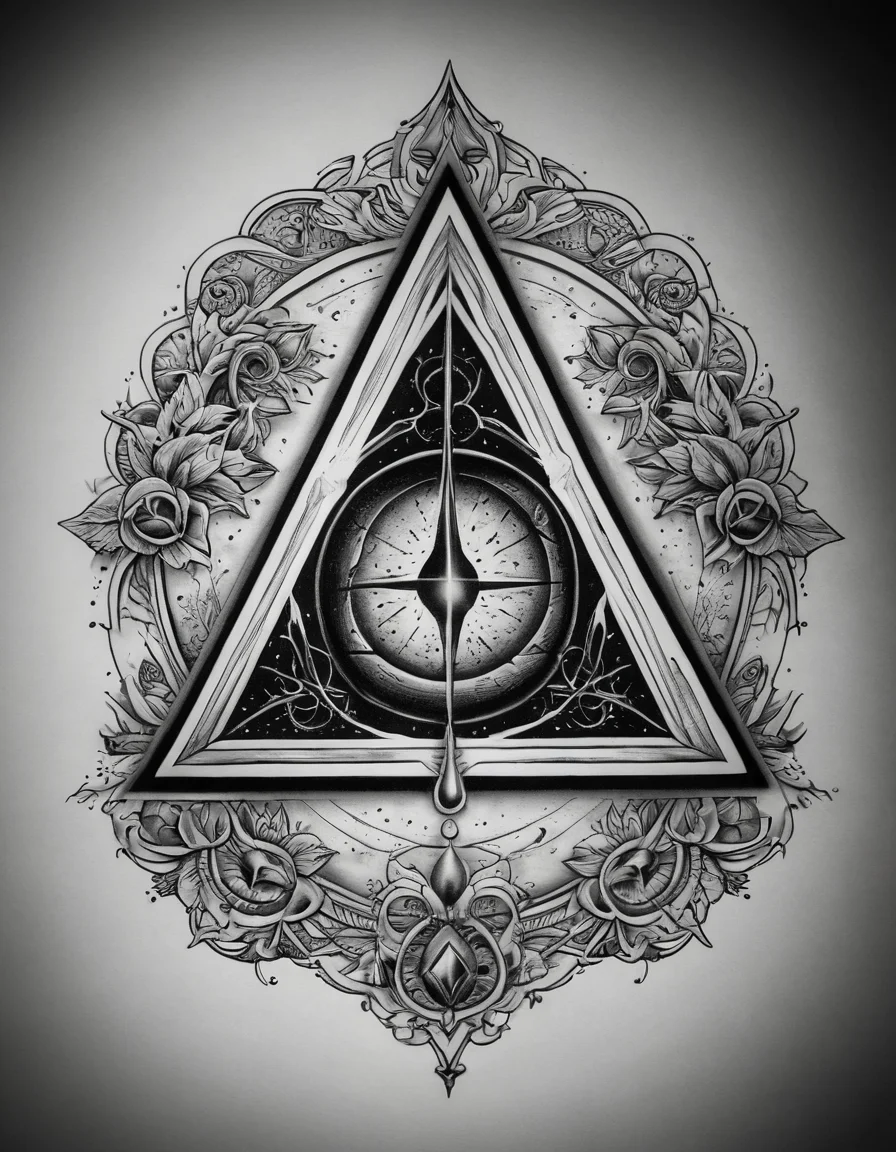
Greetings, dear connoisseurs of tattoo art! Today, we delve into the world of one of the most mysterious and multifaceted themes – the Philosopher’s Stone. This mystical artifact, shrouded in centuries of secrets and legends, has found new life as a sketch for body art. In this article, we will explore with you what a Philosopher’s Stone tattoo truly signifies, its origins, how it can be interpreted, and how to choose the perfect design for yourself. As an experienced tattoo artist, I often encounter clients’ questions about symbolism, and today I will share my knowledge to help you make an informed and inspired choice.
The Philosopher’s Stone: What is this Symbol and its Main Meaning in Tattooing
The Philosopher’s Stone is perhaps one of the most famous and coveted objects in the history of alchemy. Its primary purpose, according to ancient treatises, was the ability to transmute base metals, such as lead, into gold, as well as to create the elixir of life, granting immortality. It is these properties – transformation, perfection, and eternal life – that form the basis of the symbolism of the Philosopher’s Stone tattoo.
When a person chooses the Philosopher’s Stone for their tattoo, they often seek to immortalize on their body the pursuit of perfection, of spiritual or material transformation. It can be a symbol of personal growth, overcoming difficulties, achieving inner harmony, or even the desire to comprehend the mysteries of existence. A Philosopher’s Stone tattoo speaks of deep inner work, the search for truth, and the aspiration for a higher form of existence, both physically and spiritually.
It is important to understand that the meaning of a tattoo is always individual. For some, it is a symbol of wisdom and the acquisition of knowledge; for another, a pursuit of financial well-being (through association with gold); and for a third, a hope for healing or longevity. The stone can symbolize not only external changes but also profound internal transformations, the acquisition of a new “self,” a rebirth from the ashes of old problems and mistakes.
Historical Roots: From Alchemy to Mystical Teachings – Where the Meaning of the Philosopher’s Stone Originated
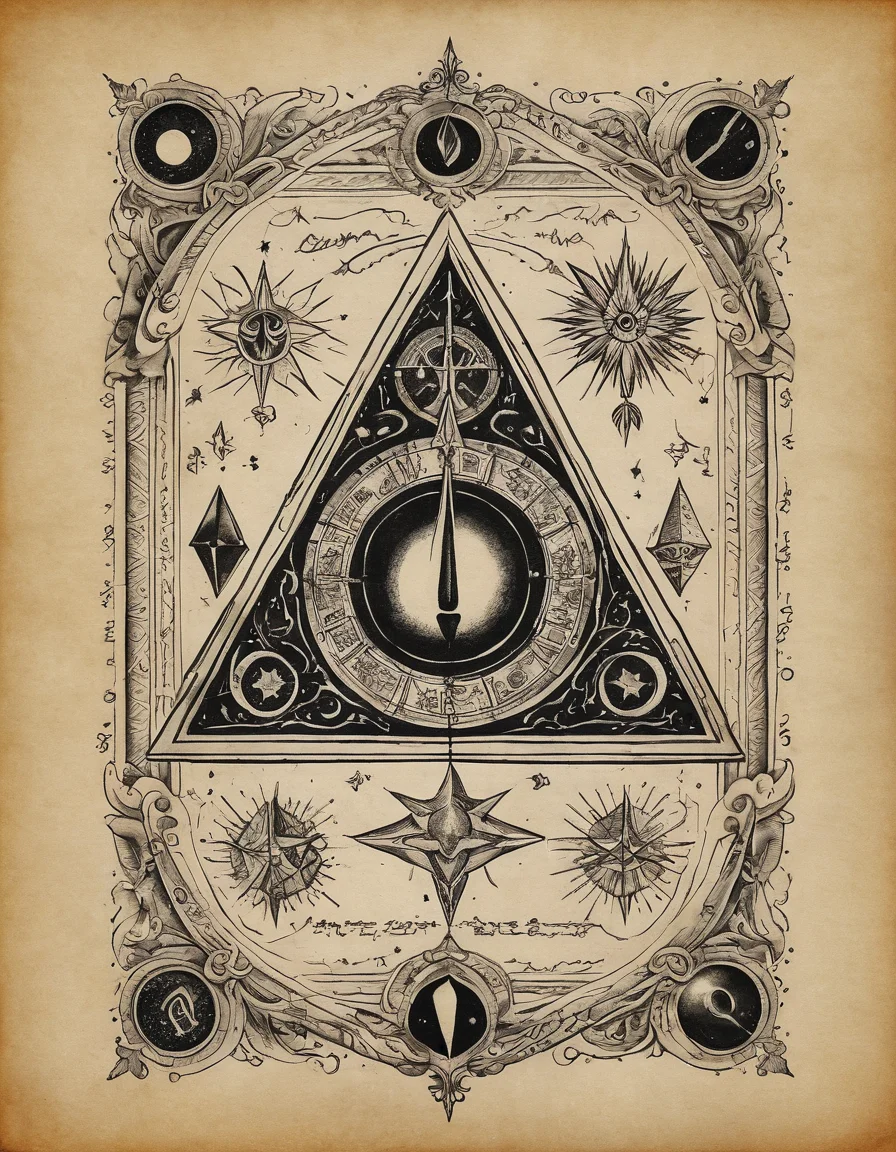
The history of the Philosopher’s Stone dates back to deep antiquity, intertwined with various mystical teachings and, of course, alchemy. The very term “alchemy” comes from the Arabic “al-kimiyā,” which can be translated as “the art of concealment” or “Egyptian art.” Alchemists worldwide, from Ancient Egypt and Greece to medieval Europe and Asia, sought this mythical stone.
It is believed that the first mentions of similar substances can be found in Egyptian papyri. Then, the ideas developed in ancient Greece, where philosophers pondered the primordial elements and the possibility of their transformation. In medieval Europe, alchemy reached its peak. Great masters, such as Nicolas Flamel, were believed to possess the secret of the Philosopher’s Stone. Their works, full of enigmatic symbols and ciphers, still captivate the minds of researchers.
Alchemy was not just a pursuit of gold. It was a complex system of knowledge that included philosophy, astrology, medicine, and even spiritual practices. For the alchemist, the Philosopher’s Stone was a symbol not only of material transformation but also of spiritual perfection. The process of its creation – the Great Work (Magnum Opus) – represented a metaphor for a person’s spiritual journey, their transformation from an imperfect to an enlightened state.
In mystical teachings, such as Hermeticism, the Philosopher’s Stone is associated with comprehending the profound meaning of existence, with uniting opposites (e.g., masculine and feminine principles, spirit and matter) to achieve unity and wholeness. In this context, a tattoo can symbolize the aspiration for harmony, for the integration of all aspects of one’s personality.
Modern culture has also contributed. Thanks to bestsellers like “Harry Potter,” the Philosopher’s Stone has become widely known as a symbol of immortality and power. Although this is a more simplified interpretation, it can also be a basis for choosing this symbol as a tattoo, especially for those who grew up with these stories and appreciate their magic.
Visual Interpretations: How the Philosopher’s Stone is Depicted and in Which Tattoo Styles it Looks Best
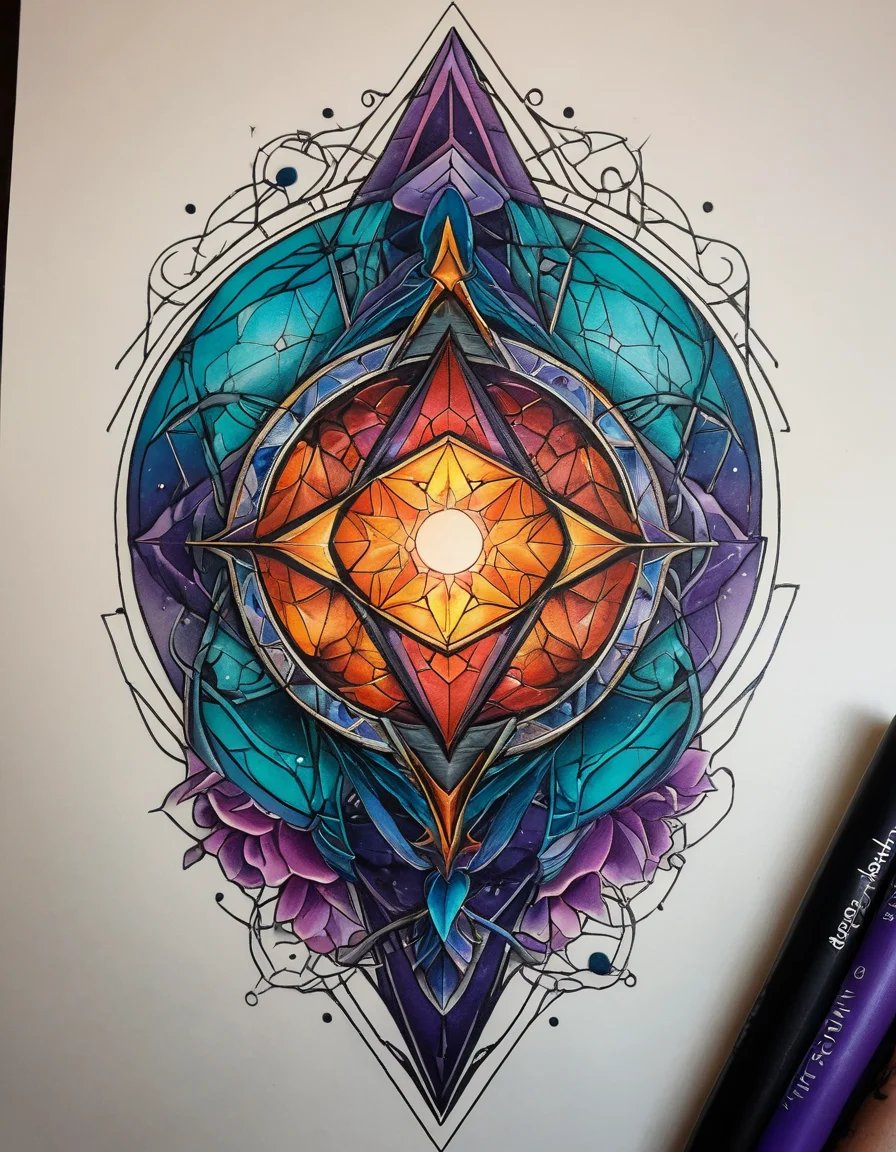
The visual representation of the Philosopher’s Stone can be very diverse, giving artists great freedom for creativity. It is often depicted as a precious stone – sparkling, multifaceted, radiating light. The color can vary: from bright red, symbolizing the active principle and transformation, to deep blue or purple, associated with wisdom and spirituality. Sometimes the stone is depicted in the form of a crystal, pyramid, or even a sphere.
However, the “stone” itself is only one facet. Often, the Philosopher’s Stone is depicted in the context of alchemical symbols. These can include:
- Serpent (Ouroboros): A symbol of eternity, the cycle of life and death, and the unity of opposites. The serpent biting its tail is often present in alchemical imagery.
- Sun and Moon: They personify the masculine and feminine principles, the active and passive, day and night. Their union is also an important element in achieving transmutation.
- Cross and Circle: A symbol of the union of the spiritual (cross) and the material (circle).
- Laboratory Equipment: Retorts, flasks, crucibles – elements directly related to the process of alchemical experiments.
As for tattoo styles, the Philosopher’s Stone is revealed differently:
- Realism/Hyperrealism: Allows for maximum detail in rendering the stone’s texture, its shine, and adding a glow effect. This approach gives the image depth and weight.
- Dotwork and Linework: Ideal for creating intricate patterns, mystical ornaments, and fine lines. These styles perfectly convey the atmosphere of mystery and antiquity inherent in the Philosopher’s Stone.
- Geometric: Combining the Philosopher’s Stone with geometric shapes such as cubes, spheres, and pyramids can emphasize its role as a fundamental element, a central piece, or a symbol of harmony and order.
- Traditional (Old School/New School): Brighter and bolder interpretations, where the stone can be stylized, complemented by classic elements like roses or skulls, or rendered in a more cartoonish style.
- Whipshading: A technique that allows for smooth transitions and volume, which is excellent for depicting a stone with an inner glow or mysterious shadows.
I often advise clients who want to emphasize the mystical component to choose dotwork or linework with the addition of alchemical symbols. If the goal is to show the stone as something powerful and precious, realism will be the best choice.
Male Interpretation: The Philosopher’s Stone as a Symbol of Strength, Wisdom, and Goal Achievement

For men, a Philosopher’s Stone tattoo often symbolizes the pursuit of power, strength of spirit, and the achievement of ambitious goals. It is a symbol of transmutation, but in the context of male energy, it means transforming weaknesses into strengths, overcoming obstacles, and mastering one’s chosen field.
Strength and Determination: The Philosopher’s Stone is the key to a higher goal. For a man, this can signify a drive for leadership, for conquering peaks. The tattoo serves as a reminder of inner strength, of the ability to transform any difficulty into an opportunity. It is a symbol of the determination to see things through, regardless of obstacles.
Wisdom and Knowledge: Alchemists sought not only gold but also profound knowledge about the world. For a man, a Philosopher’s Stone tattoo can signify a thirst for knowledge, a pursuit of wisdom, an understanding of the laws of the universe. It is a symbol of intellectual power and the ability to make well-considered decisions.
Goal Achievement: The very name “Philosopher’s Stone” implies the achievement of a certain ultimate, perfect goal. For a man, this can be related to career advancement, achieving financial stability, mastering a profession or sport. The tattoo becomes a kind of talisman that helps focus on one’s goals and move towards them.
Transformation and Self-Improvement: In the male interpretation, the Philosopher’s Stone can also symbolize the process of self-improvement. This can involve working on one’s character, shedding bad habits, developing endurance and resilience. It is a symbol of constant forward movement, the aspiration to become the best version of oneself.
When choosing a design, men often prefer more monumental images, possibly with the addition of symbols like an eagle (strength, flight), a lion (power, courage), or geometric elements emphasizing structure and order. The size of the tattoo can also be significant – from a small but powerful detail to a large, intricate depiction.
Female Interpretation: The Philosopher’s Stone as a Symbol of Transformation, Intuition, and Inner Harmony
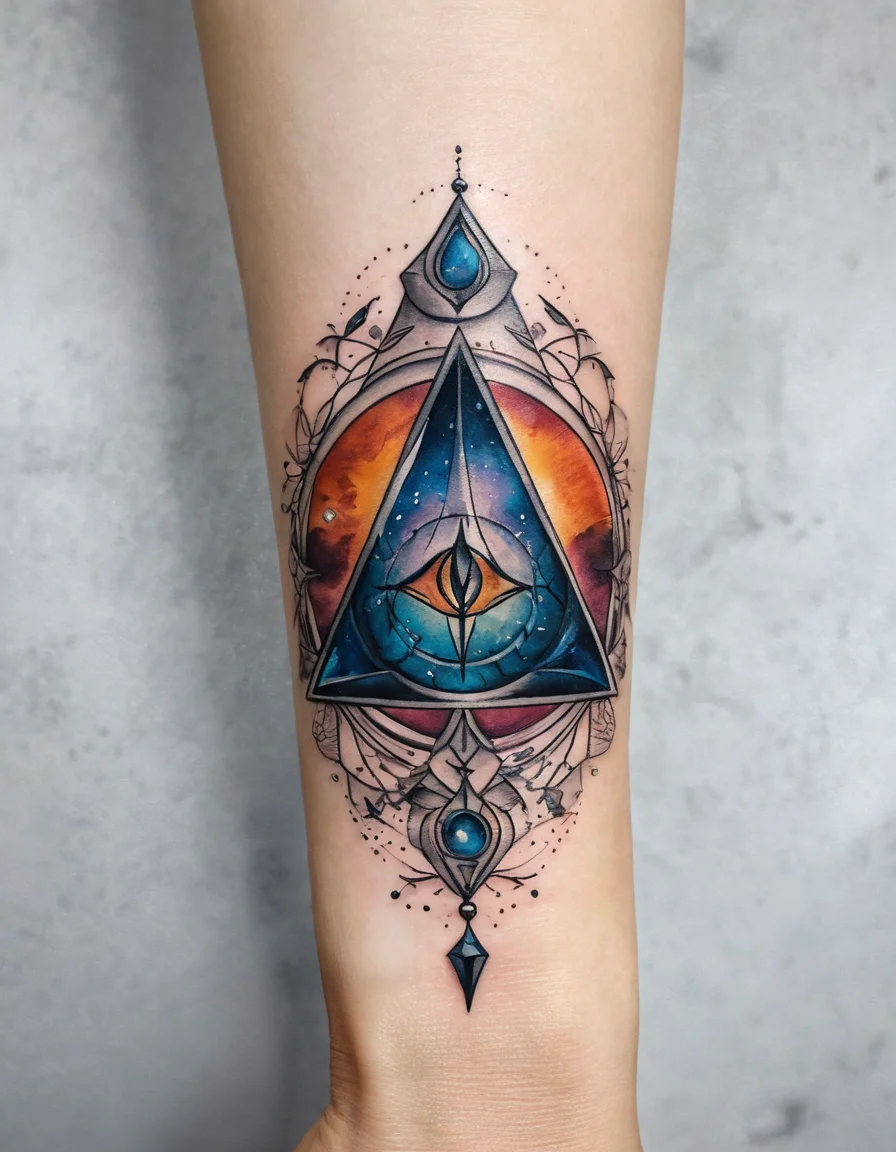
In the female interpretation, the Philosopher’s Stone acquires more subtle, intuitive, and spiritual meanings. Here, the emphasis shifts from external strength to internal transformation, to the development of intuition, harmony, and self-discovery.
Inner Transformation and Rebirth: Just as alchemists sought to turn lead into gold, women often see the Philosopher’s Stone as a symbol of their capacity for transformation. This can involve overcoming life’s difficulties, healing after painful experiences, acquiring a new identity, or spiritual awakening. The tattoo becomes a reminder of the inner strength capable of complete metamorphosis.
Intuition and Wisdom: Female intuition is a powerful tool. The Philosopher’s Stone, as a symbol of secret knowledge, can personify a woman’s aspiration to develop her intuition, to comprehend hidden truths and deep meanings. It is a symbol of wisdom stemming not so much from logic as from inner feeling.
Harmony and Wholeness: The alchemical process of creating the stone is often associated with the union of opposites. For women, this can symbolize the pursuit of inner harmony, the reconciliation of different aspects of their personality, the achievement of balance between the feminine and masculine principles, between emotions and reason. It is a symbol of wholeness and self-sufficiency.
Creative Potential and Creation: The Philosopher’s Stone is the result of meticulous work and deep understanding. For women, especially those involved in creative professions or engaged in creating something new (be it a family, a project, or a work of art), a tattoo can symbolize the unlocking of creative potential, the ability to bring ideas to life, to create beauty and harmony.
Connection with Nature and Mysticism: Many women feel a deep connection with nature and its cycles. The Philosopher’s Stone, with its mysterious properties and associations with ancient knowledge, can emphasize this connection, symbolize the search for spiritual paths, and an interest in esotericism and magic.
In women’s tattoos, the Philosopher’s Stone is often depicted in a more delicate manner. It may be surrounded by floral motifs (e.g., lotus, rose), complemented by symbols of the moon, stars, or have softer, flowing forms. The color palette can be more gentle, using pastel shades or emphasizing an inner glow.
Ideal Locations for a Philosopher’s Stone Tattoo: Where to Get It to Emphasize Its Meaning
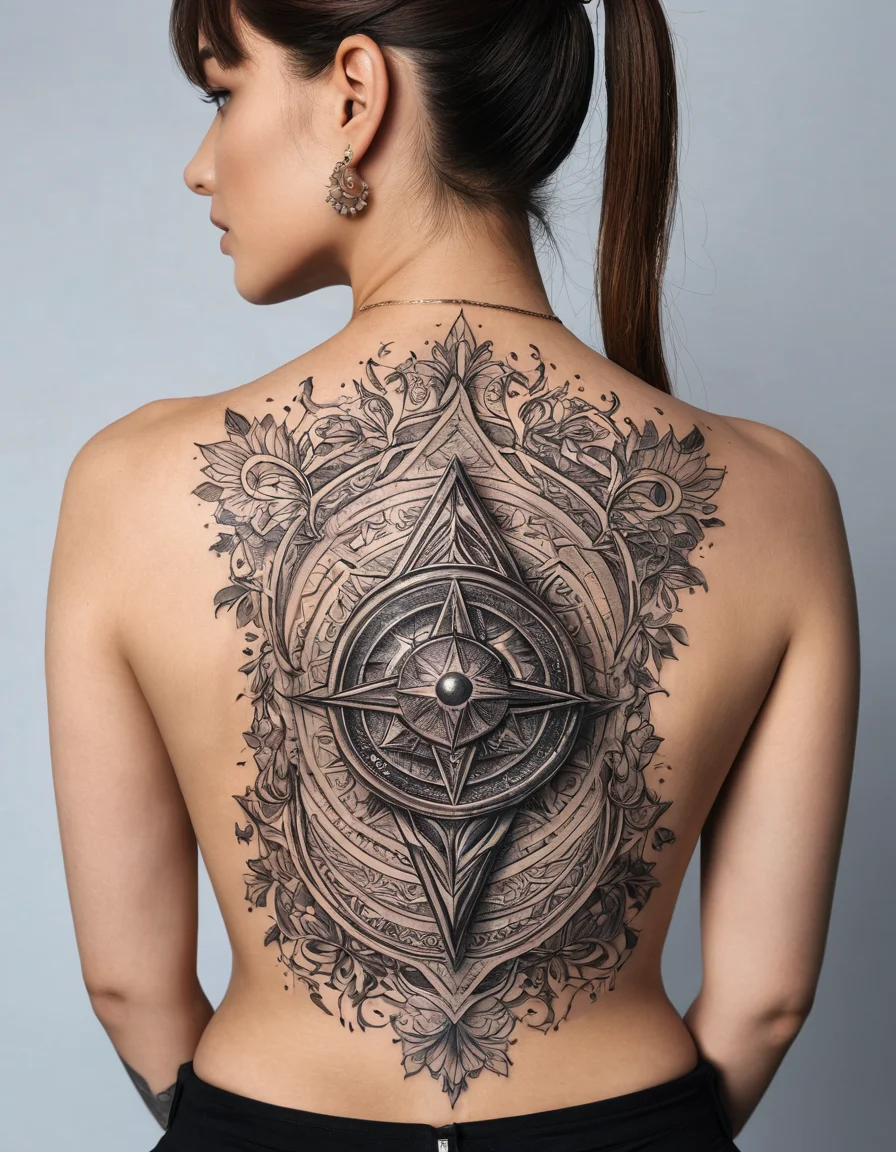
Choosing a location for a tattoo is no less important than choosing the design itself. The placement on the body can enhance or, conversely, diminish the symbolism of the image, as well as affect its visual perception.
Forearm: One of the most popular locations. Here, a Philosopher’s Stone tattoo will always be visible, serving as a reminder of its meaning. This area is suitable for both small and quite detailed works. For men, it can symbolize the active manifestation of strength and wisdom in the external world; for women, a constant connection to the inner source of transformation.
Shoulder and Bicep: These areas are often chosen by men who want to emphasize strength and determination. A tattoo on the shoulder or bicep looks powerful and confident. The stone here can be associated with inner energy ready for action.
Back: The large area of the back allows for the creation of a true work of art – a large-scale depiction of the Philosopher’s Stone with many details and accompanying symbols. This location is ideal for those who want to delve deeply into the theme and create a tattoo that unfolds gradually. The symbolism here can be related to the inner core, the foundation of personality, or the spiritual path that a person has walked or is just beginning.
Chest: A tattoo on the chest, especially closer to the heart, often carries a very personal, intimate meaning. For the Philosopher’s Stone, it can be a symbol of achieving inner harmony, self-love, accepting one’s true essence. This location can also symbolize the “heart” of transformation, the source of life force.
Wrist: Ideal for small, delicate images. A tattoo on the wrist is a personal talisman that is always with you. It can symbolize a subtle tuning, a constant connection to the source of wisdom or life force.
Side of the Torso (Ribs): This is a more hidden location, often chosen by those who want the tattoo to have a personal meaning, known only to themselves or a very small circle of people. The Philosopher’s Stone here can symbolize hidden knowledge, secret aspirations, or deep internal processes that are not outwardly displayed.
Neck: Especially the back of the neck or the area behind the ear. This location is associated with the mind, thoughts, and insight. The Philosopher’s Stone here can symbolize enlightenment, clarity of mind, and the attainment of truth.
Legs (e.g., calf or thigh): These areas also offer plenty of space for detail. A tattoo on the leg can symbolize the path, moving forward, striving towards a goal. The Philosopher’s Stone here can signify that the process of achieving the goal itself is transformative and valuable.
When choosing a location, I always advise trying on the sketch, imagining how it will look in reality, how it will feel on the skin. It is important that the location harmonizes with the image itself and your personal feelings.
Constellations of Meaning: What Symbols the Philosopher’s Stone Combines With in a Single Tattoo
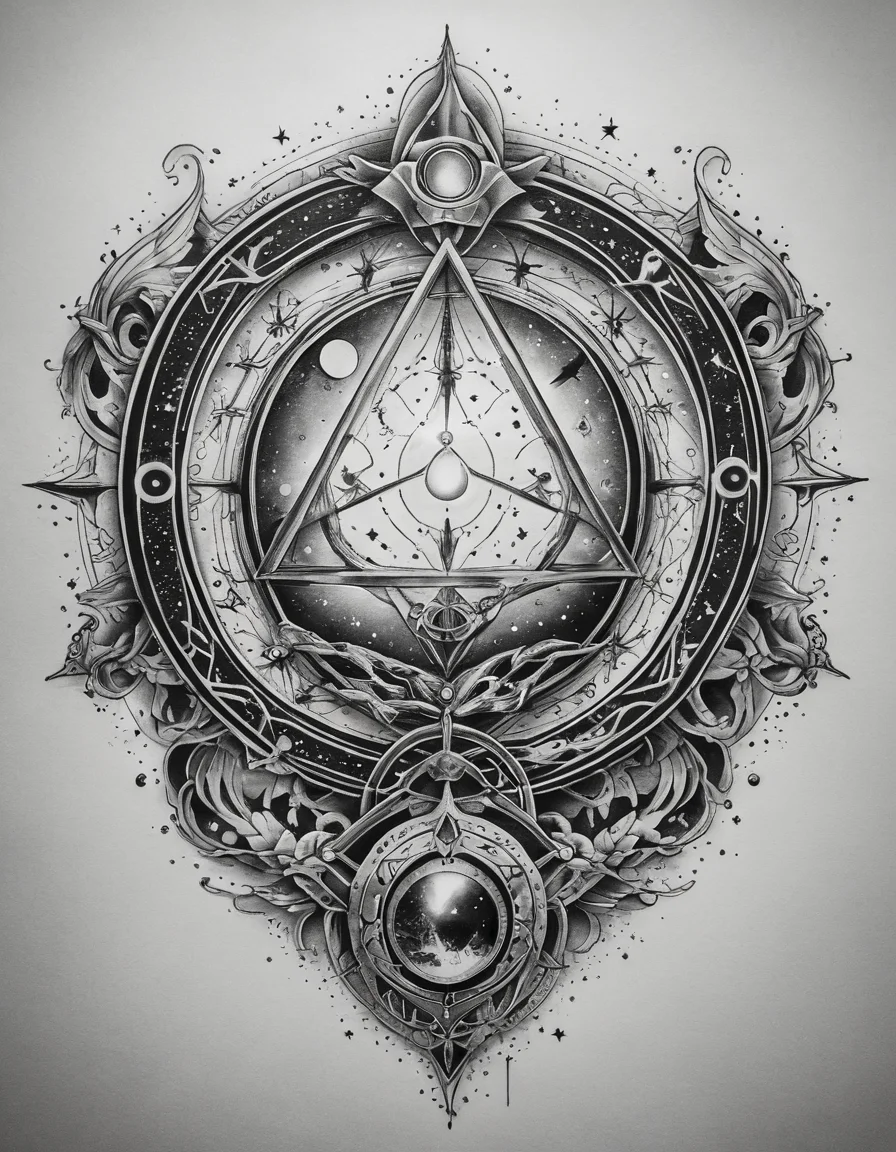
The Philosopher’s Stone is a powerful standalone symbol, but its meaning can be expanded and deepened by combining it with other symbols. Creating such a composition allows for a more complex narrative and imbues the tattoo with additional layers of meaning.
Alchemical Symbols: As mentioned earlier, classic alchemical signs perfectly complement the Philosopher’s Stone.
- Ouroboros (serpent biting its tail): Emphasizes the cyclical nature of life, eternal renewal, transformation, and wholeness.
- Sun and Moon: Symbolize the union of opposites, the achievement of balance, masculine and feminine principles, the conscious and the unconscious.
- Cross and Circle: The union of the spiritual and the material, the earthly and the divine.
- Elements (Fire, Water, Air, Earth): Can symbolize the elements that make up the world, or the qualities that need to be transformed or united.
Astrological Symbols: The Philosopher’s Stone is often associated with astrology and the cosmos.
- Planets and Stars: Can indicate the influence of celestial bodies on the process of transformation, the aspiration towards higher spheres.
- Constellations: Incorporating one’s constellation into the composition can add a personal, fated aspect.
- Moon and Sun: Already mentioned as alchemical, but they also carry powerful astrological and mythological meaning.
Symbols of Nature: Nature is an eternal source of transformation and perfection.
- Flowers (e.g., lotus, rose): The lotus is a symbol of purity, spiritual awakening, and enlightenment. The rose is a symbol of passion, love, but also mystery.
- Tree of Life: Represents the connection between all forms of life, growth, wisdom, and immortality.
- Birds (e.g., phoenix): The phoenix is a vivid symbol of rebirth from ashes, immortality, and transformation, very close in meaning to the Philosopher’s Stone.
- Crystals and Gemstones: Can enhance the idea of perfection, value, and inner energy.
Religious and Mystical Symbols:
- Mandala: A symbol of the universe, harmony, and wholeness.
- Om Symbol: A sacred sound in Hinduism, a symbol of the universe and consciousness.
- Dragon: In Eastern culture, a symbol of wisdom, strength, luck, and transformation.
Personal Symbols: Do not forget that the most powerful tattoo is one that has personal meaning. Combining the Philosopher’s Stone with initials, a date, a significant place, or an object can make it even more unique.
When creating a composition, I always strive to ensure that all elements harmonize with each other and do not overload the image. It is important that each symbol adds a new layer of meaning rather than creating visual chaos. We can discuss your personal associations and choose the perfect combination.
What to Avoid: Common Mistakes and Incorrect Interpretations When Choosing a Philosopher’s Stone Tattoo
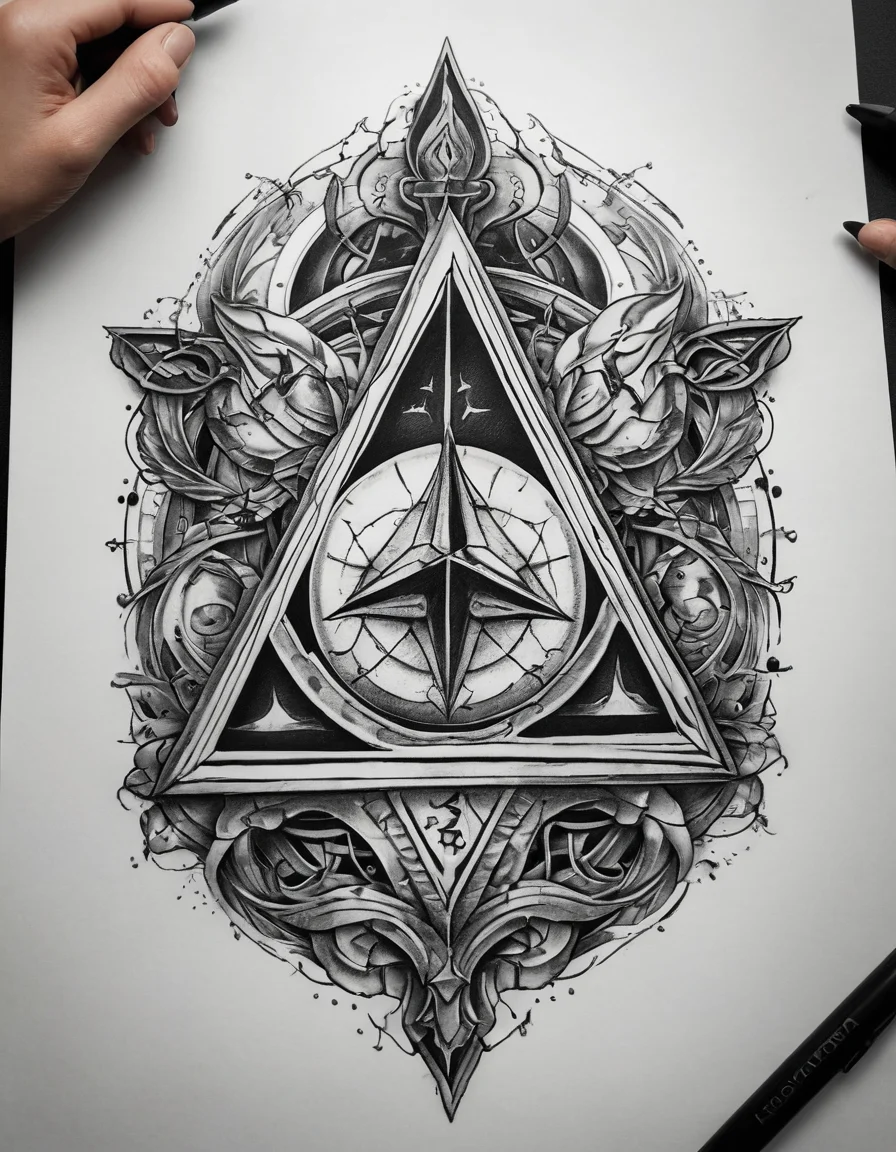
Despite the rich symbolism of the Philosopher’s Stone, there are several common mistakes that can lead to an incorrect interpretation of the tattoo or simply to its less-than-ideal execution. As an artist, I want to caution you against them.
1. Excessive Focus on the “Golden” Aspect:
Mistake: Reducing the meaning of the Philosopher’s Stone solely to the transmutation of lead into gold, associating it exclusively with wealth and material success. Why it’s bad: This greatly simplifies and distorts the profound meaning of alchemy and the Philosopher’s Stone, which is much broader and includes spiritual, mental, and emotional transformation. The tattoo may be perceived as superficial or even as a call to mere greed.
2. Ignoring Context:
Mistake: Choosing an image of the stone or related symbols without understanding their historical and cultural context. Why it’s bad: Incorrectly combining symbols or misinterpreting them can create a contradictory or meaningless message. For example, using alchemical signs in the wrong sequence or without understanding their role.
3. Popular Culture Influence:
Mistake: Relying solely on images from books or films (e.g., “Harry Potter”), forgetting about deeper and more multifaceted historical interpretations. Why it’s bad: While it can be a starting point, such a tattoo may carry only a superficial meaning, understandable to many, but not reflecting the owner’s true, personal aspirations.
4. Overloading the Composition:
Mistake: Trying to cram too many symbols into one image, aiming to encompass all possible meanings. Why it’s bad: This can lead to a chaotic, illegible tattoo where the main symbol – the Philosopher’s Stone – gets lost among secondary elements. Sometimes, less is more.
5. Incorrect Style Choice:
Mistake: Choosing a style that does not match the concept or the image itself. For example, trying to depict a complex, mystical Philosopher’s Stone in a minimalist style where it would lose detail and depth, or conversely, trying to create a very intricate dotwork image on a small area of skin where it would be unreadable.
6. Lack of Personal Connection:
Mistake: Choosing a tattoo simply because it is “beautiful” or “popular,” without understanding its meaning for yourself. Why it’s bad: A tattoo is a part of your personality. If you don’t feel a connection to its meaning, over time it may cease to bring you joy or even evoke negative emotions. The Philosopher’s Stone is a symbol of deep transformation, and it should resonate with your inner world.
Artist’s Advice: Before deciding on a Philosopher’s Stone tattoo, do your own research. Read about different interpretations, think about what this symbol means to you specifically. Discuss your ideas with an experienced artist who will help you not only choose the perfect sketch but also avoid common mistakes, creating a truly meaningful and harmonious tattoo that you will be proud of.