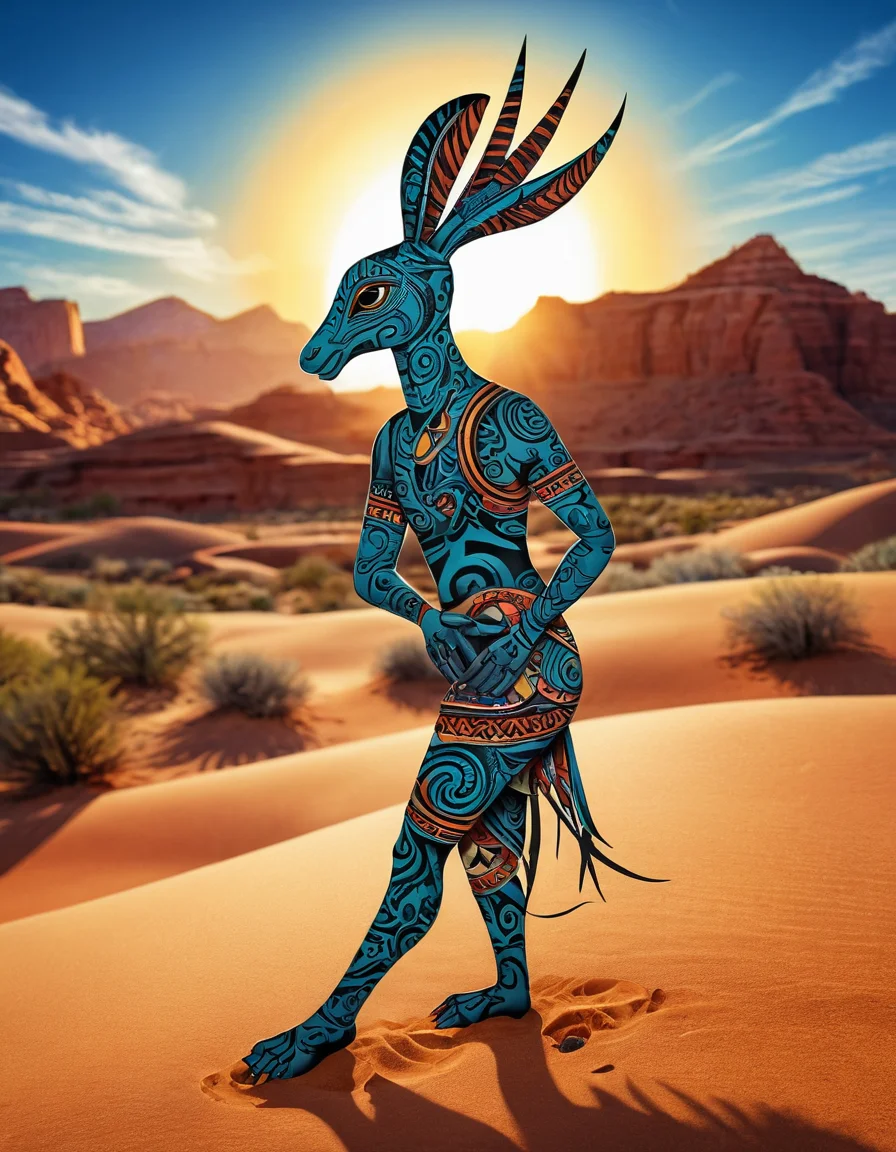
Greetings, dear seekers of meaning and beauty in the world of tattoos! My name is [Ваше Имя], and today we will dive into the amazing world of one of the most mysterious and captivating symbols – Kokopelli. It’s not just a drawing, it’s a whole story embodied in lines and ink, carrying ancient wisdom and positive energy. On tattoo-photo.ru, we strive to reveal the depth of every tattoo, and Kokopelli is a prime example. This symbol, which comes to us from the mythology of the indigenous peoples of North America, has a multifaceted meaning associated with fertility, music, creativity, and even humor. In this article, we will analyze its origins, symbolism, styles of execution, and how it can be interpreted in modern tattooing. Get ready to learn why Kokopelli is so attractive to people and what story it can tell about you.
The Meaning of Kokopelli Tattoos: The Spirit of Fertility, Music, and Carefreeness
Kokopelli is, first and foremost, a spirit. A spirit that brings joy, luck, fertility, and abundance. His image is recognizable: a hunched back, a long nose, often with a flute in his hands and a phallus, symbolizing fertility. But behind this seemingly simple picture lies a deep meaning. In the cultures of the Pueblo peoples (such as the Hopi, Zuni, Anasazi), Kokopelli is associated with spring, with nature’s awakening after winter. His flute symbolizes music, song, inspiration – that which enlivens the soul and brings harmony. The hunched back is usually interpreted in two ways: either as a bag of seeds that he scatters, bestowing fertility upon the land and people, or as a symbol of life experience and wisdom accumulated over a long journey. And sometimes this hump is just part of his eccentric, slightly awkward, but very charming image. It is important to understand that Kokopelli is not a deity in the usual sense, but rather a trickster spirit, a jester, and yet a benefactor. He can bring rain, ensure a good harvest, promote childbirth, but also play fun pranks. This duality makes his image even more attractive and mysterious. A tattoo with Kokopelli is a call to the joy of life, to creative self-expression, to embracing abundance in all its forms. It is a symbol of optimism, freedom from worries, and readiness to meet the world with an open heart and a smile.
The History and Mythology of Kokopelli: From Ancient Rock Paintings to Modern Tattoos
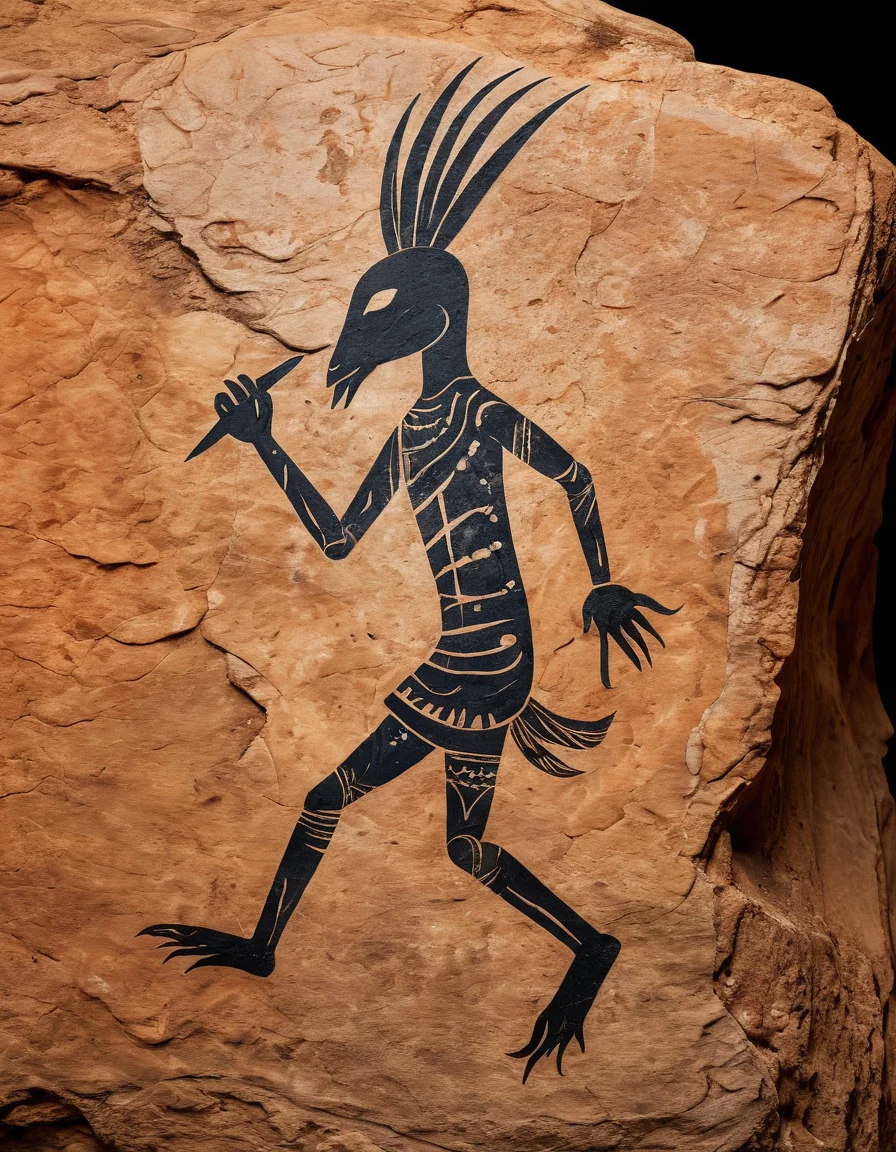
The journey of Kokopelli from ancient petroglyphs to modern tattoos is a fascinating journey through centuries and cultures. The first images resembling Kokopelli were found on rocks in the southwestern regions of North America and date back thousands of years. These rock carvings (petroglyphs) and pottery drawings left by ancient tribes were not just decoration but had sacred significance. They were part of rituals related to fertility, hunting, and harvest. Kokopelli was considered a messenger of the gods, a harbinger of spring, who awakened nature with his appearance. His image was passed down from generation to generation, acquiring new details and interpretations. Kokopelli acquired special significance in the mythology of the Hopi people, where he is one of the key characters. It is interesting that his image could vary from tribe to tribe. Somewhere he was revered as a powerful spirit, somewhere – as a cheerful wanderer and musician. With the arrival of Europeans and the change in the lifestyle of Native Americans, the symbolism of Kokopelli, like many other traditions, began to transform. However, his image was not forgotten. In the 20th century, thanks to the works of anthropologists and artists, Kokopelli regained popularity. He became a symbol of the American Southwest, its unique culture and nature. For modern people, especially those interested in Native American culture or seeking symbols related to nature, creativity, and positivity, Kokopelli has become a source of inspiration. He has gone from a sacred symbol of ancient rituals to a recognizable image in art, music, and, of course, tattoos. This long history gives Kokopelli tattoos additional depth and significance. When you decide on such a tattoo, you are touching a heritage of millennia, an ancient wisdom that continues to live and inspire us today.
Kokopelli Tattoo Styles: From Traditional Indigenous Motifs to Modern Interpretations
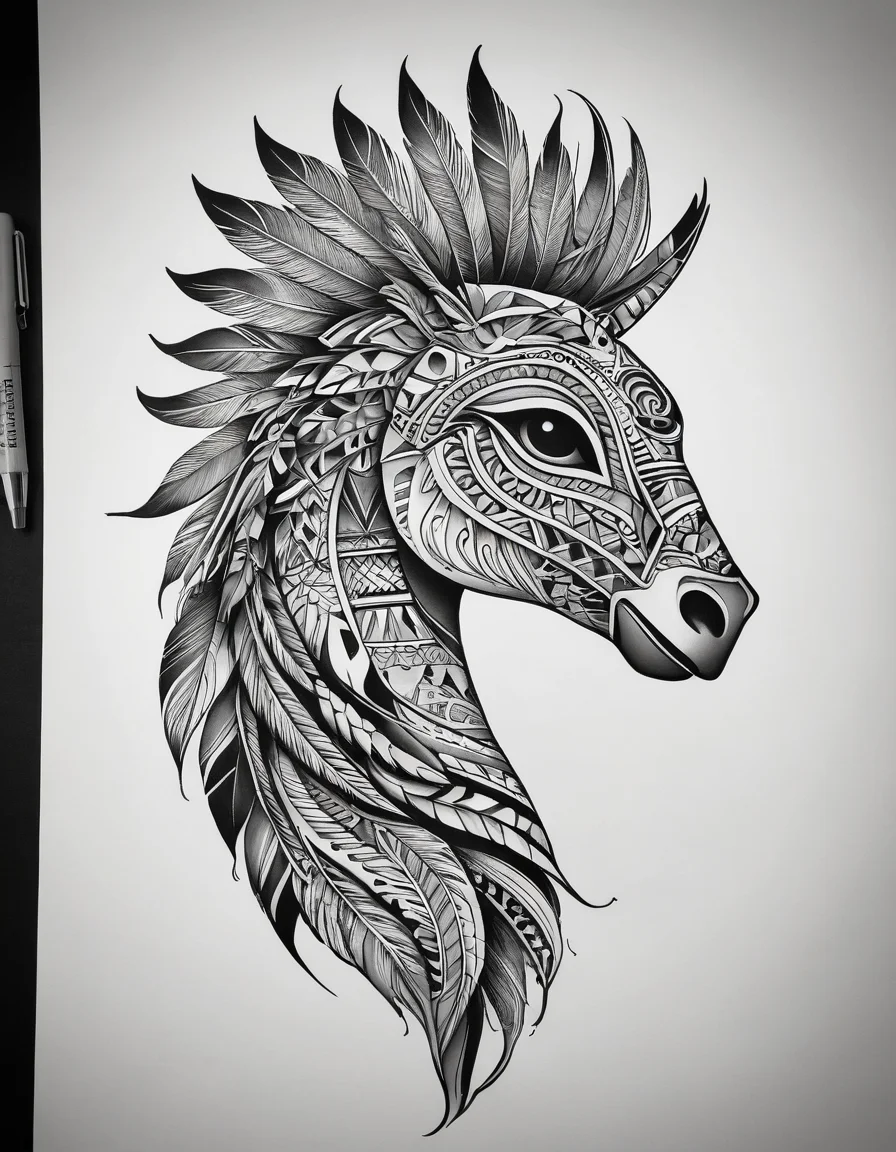
One of the most fascinating aspects of Kokopelli tattoos is their stylistic variability. You can choose an execution that best suits your vision and preferences. Let’s look at the main directions:
- Traditional Indigenous Style: This style is as close as possible to the original images found on petroglyphs and in folk art. Simple yet expressive lines, characteristic patterns used in traditional indigenous painting and weaving prevail here. The color palette can be restrained, using earthy tones, or bright, imitating natural dyes. This style emphasizes the authenticity and historical connection of the symbol.
- Graphics and Linework: For lovers of minimalism and clarity, graphic execution is suitable. Here, the emphasis is on thin, clean lines. Kokopelli can be depicted as a contour drawing, without color fill or with minimal use of shadows. This makes the tattoo elegant, light, and modern. Linework looks great on small body areas and combines perfectly with other black and white tattoos.
- Tribal: This style, inspired by tribal patterns, harmonizes perfectly with the image of Kokopelli. It uses dense black lines and geometric patterns that can be stylized to resemble indigenous motifs. Tribal adds power, dynamics, and some aggression to the tattoo, which can be an interesting interpretation of the traditional image.
- Realism: If you want to give the image of Kokopelli maximum vividness and detail, then realism is your choice. The artist can convey the texture of his clothing, facial expression, details of the musical instrument, add elements of nature – leaves, flowers, sun. A realistic Kokopelli looks very impressive and can become a true work of art on your body.
- Watercolor: This modern style gives the image of Kokopelli lightness, airiness, and unique picturesque quality. Blurred contours, bright color transitions, imitation of paint splashes – all this creates an effect of ephemerality and artistic freedom. A watercolor Kokopelli looks very delicate and artistic, perfect for those who appreciate creativity.
- Mixed Styles: Don’t be afraid to experiment! Kokopelli can be executed in a combination of several styles. For example, a contour in graphics and a bright watercolor fill, or a realistic image with added tribal elements. The main thing is that the result pleases you and harmonizes with your image.
When choosing a style, I always advise clients to think about what mood they want to convey with their tattoo. Do you want to emphasize antiquity and mysticism? Choose traditional motifs or tribal. Prefer modernity and minimalism? Graphics or linework. And if you want your Kokopelli to look as vivid and spectacular as possible, pay attention to realism or watercolor. It is also important to consider the size of the future tattoo and the place of its application – some styles look better in a large format, others – in miniature.
Kokopelli Tattoos for Men: A Symbol of Adventure, Abundance, and Masculine Strength
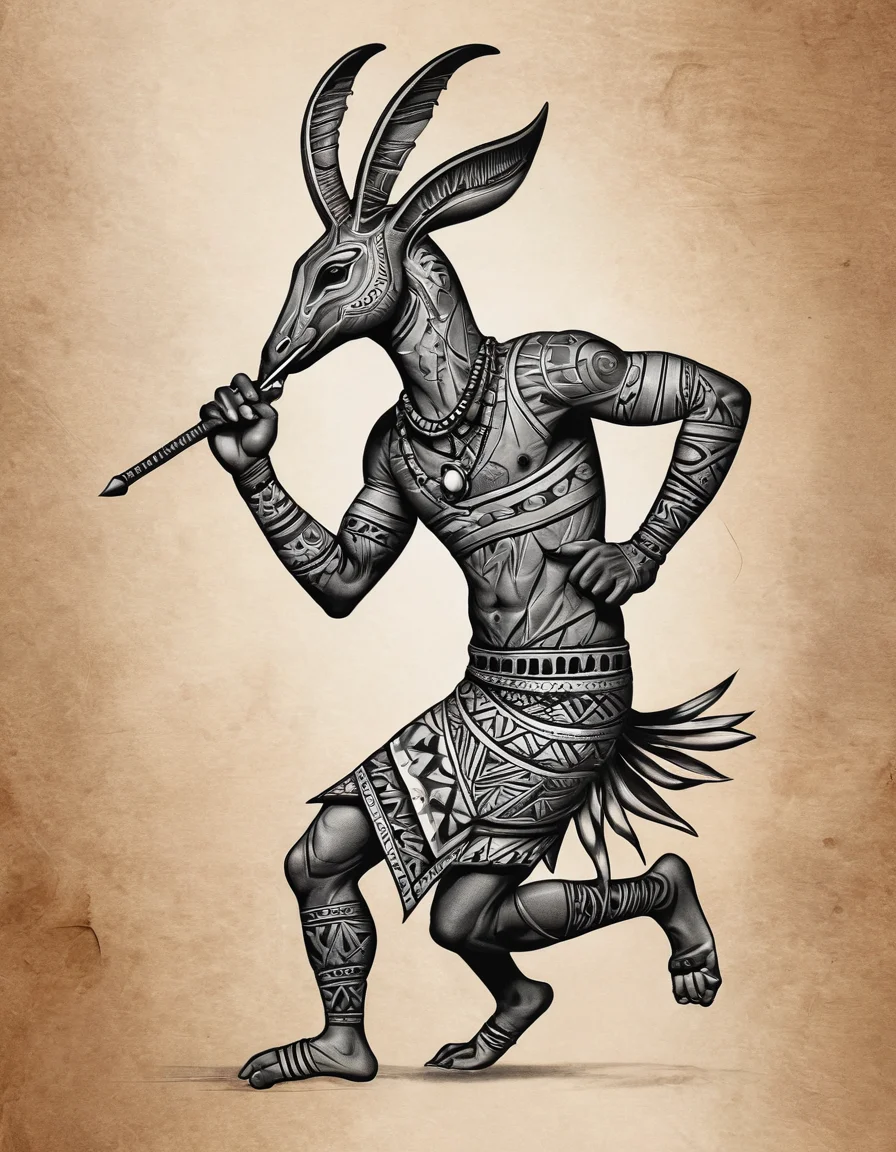
Men who choose Kokopelli tattoos often seek a symbol that reflects their inner world, aspirations, and life values. And Kokopelli fits perfectly here. His image, full of energy, movement, and positivity, resonates with the male desire for an active life, for overcoming difficulties and achieving goals. For many men, Kokopelli becomes a symbol of:
- Spirit of Adventurism and Freedom: Kokopelli is a wanderer, a traveler who is not tied to one place. His tattoo can speak of a desire to explore the world, a love for adventure, a striving to live a full, rich life full of discoveries.
- Abundance and Success: As a spirit of fertility, Kokopelli brings luck and prosperity. Men may see in him a symbol of their pursuit of success in their career, personal life, and material well-being. It is a talisman that attracts positive energies and opportunities.
- Masculine Strength and Energy: Although Kokopelli is not an aggressive symbol, his image carries powerful life force. He is associated with male energy, the ability to create, to build, to bring life. His connection with fertility is often emphasized in depictions, which can symbolize the male principle and the continuation of the lineage.
- Creativity and Inspiration: Kokopelli is a musician and singer. His tattoo can speak of a man’s creative nature, his desire for self-expression through art, music, or any other form of creativity. It is a symbol of a source of inspiration, muses.
- Optimism and Love of Life: This character is always full of zest and fun. A Kokopelli tattoo can serve as a reminder to cherish every moment, enjoy life, not to despair in the face of difficulties, and to maintain a sense of humor.
When choosing a place for a male Kokopelli tattoo, larger areas are often chosen, allowing for detailed depiction: forearm, shoulder, back, chest. The style can be anything, but men often prefer more brutal options, such as tribal, graphics, or realism, which emphasize the strength and dynamics of the symbol. However, more delicate, watercolor executions can also be interesting, reflecting a more subtle, creative side of the personality.
Kokopelli Tattoos for Women: Embodiment of Fertility, Creativity, and Feminine Energy
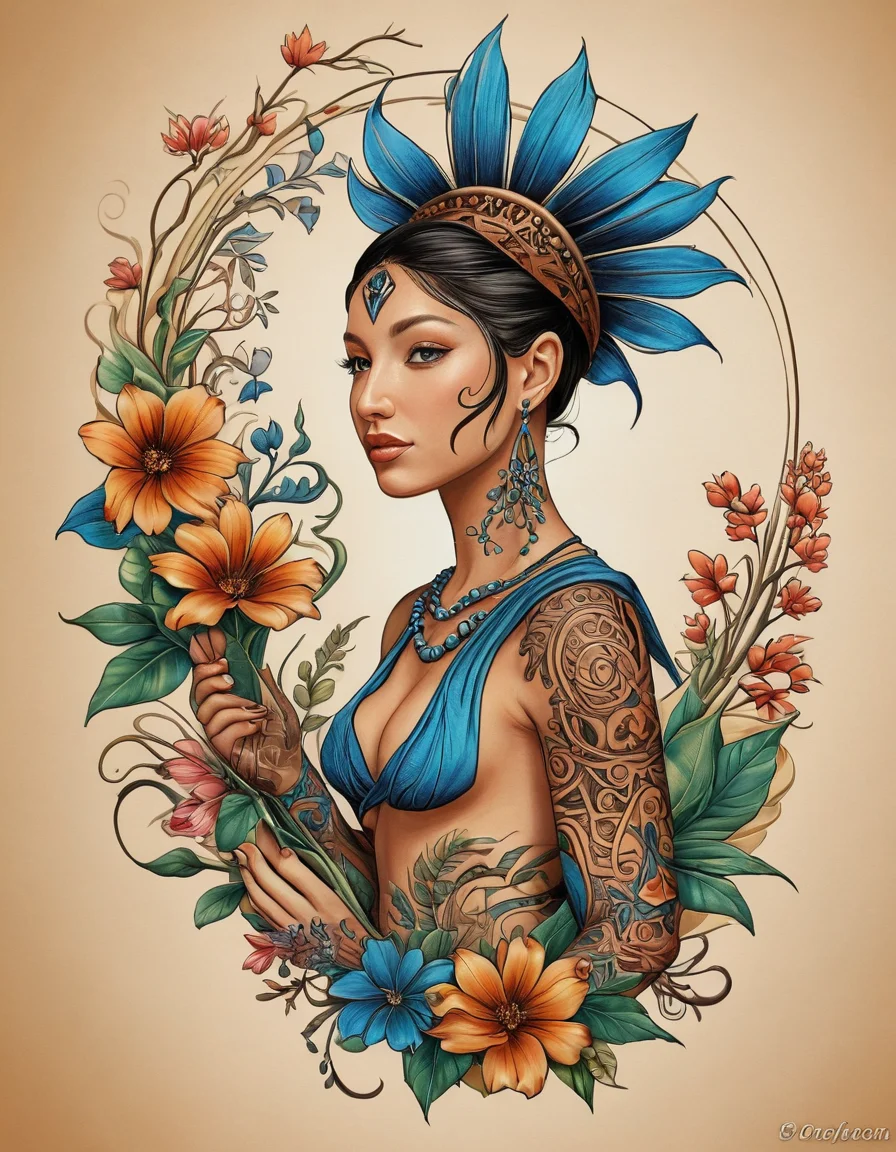
Women who choose Kokopelli tattoos often see in him a symbol associated with harmony, creativity, nature, and feminine strength. Despite the fact that in male folklore Kokopelli is often associated with the male principle, his meaning is much broader and more universal, and for women, he opens up special facets of symbolism:
- Fertility and Motherhood: This is perhaps one of the strongest meanings of Kokopelli, which is particularly close to women. He symbolizes the ability to give birth to new life, the fertility of the earth and the female body. A tattoo can be chosen by women who dream of motherhood, or who are already mothers, as a symbol of care and continuation of the lineage.
- Creative Energy and Inspiration: Kokopelli’s flute is a universal symbol of music and art. Women whose lives are connected with creativity – artists, musicians, writers, or simply those who strive for self-expression – find a source of inspiration in him. He embodies the flow of ideas, creativity, the ability to create beauty.
- Joy of Life and Carefreeness: Kokopelli is a symbol of carefree fun, games, and celebration. For women, it can mean a desire for lightness of being, for the ability to enjoy the little things, to preserve childlike spontaneity and optimism. It is a tattoo that reminds us that life is beautiful and full of joy.
- Connection with Nature: Kokopelli is closely associated with the earth, with the cycles of nature, with spring and harvest. Women who feel a deep connection with nature, with its forces and energies, may choose this symbol to emphasize their harmony with the surrounding world.
- Feminine Strength and Wisdom: Despite his playful nature, Kokopelli carries ancient wisdom. For women, he can symbolize intuitive, natural feminine strength, the ability to transform and adapt, as well as a deep understanding of life.
For women, Kokopelli tattoos are often done in more delicate styles, such as graphics, watercolor, or even with the addition of floral motifs. Sizes can be small and refined, or larger, but always with an emphasis on harmony and aesthetics. Popular locations include the wrist, forearm, shoulder blade, collarbone, ankle. It is important that the tattoo harmonizes with the feminine image and reflects her inner world.
Choosing a Location for a Kokopelli Tattoo: Best Areas and Their Symbolism
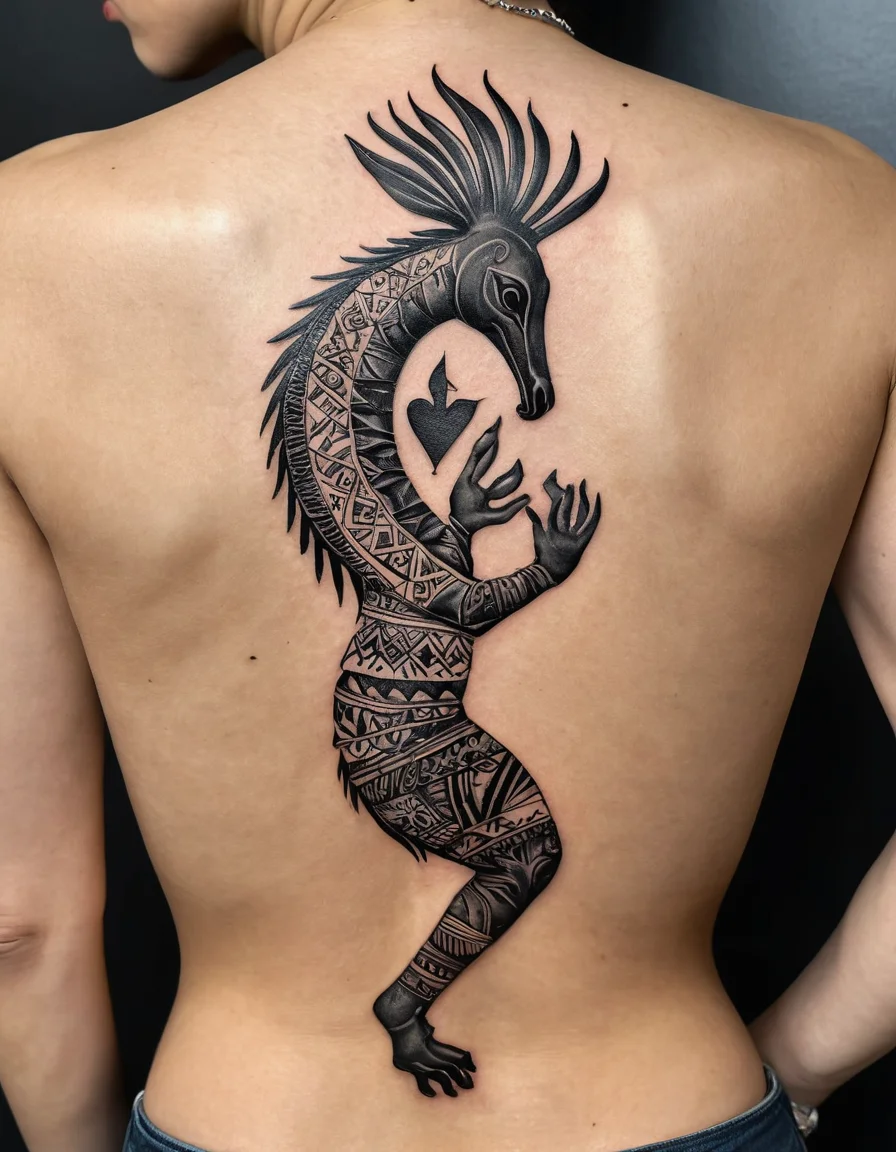
Choosing a location for a tattoo is no less important than choosing the sketch itself. Each part of the body carries its own symbolism and affects the perception of the tattoo differently. Where is the best place to position Kokopelli so that it shines with all the colors of its meaning?
- Forearm: One of the most popular places. Kokopelli here will always be visible, reminding you and others of joy, creativity, and abundance. This place symbolizes openness to the world, activity, and sociability. A tattoo on the forearm is always part of your image, a statement about yourself.
- Shoulder/Upper Arm: This is a more closed area that can symbolize hidden strength, inner energy. Kokopelli here can be your personal talisman, a charm that you show when you want to. This area is well suited for larger and more detailed images.
- Back: The extensive surface of the back allows for the realization of the boldest ideas, creating a true work of art. Kokopelli on the back can symbolize support, protection, or your striving for spiritual growth and self-discovery. This place is often chosen for large-scale compositions, where Kokopelli can be surrounded by other symbols or elements of nature.
- Chest: A tattoo on the chest, especially closer to the heart, carries a deep personal meaning. Kokopelli here can speak of your love for life, for music, for creativity, of your inner joy and optimism. This is a very intimate place for a tattoo.
- Wrist: For those who prefer small but significant tattoos. Kokopelli on the wrist is a constant reminder of the importance of living life to the fullest, enjoying every day. This place symbolizes movement, time, cyclicality.
- Shoulder Blade: Another area that allows for a fairly large, yet hidden from prying eyes tattoo. Kokopelli on the shoulder blade can be associated with freedom (like wings), with flight of thought, with creative impulse.
- Ankle/Calf: These are more playful and sensual places, especially for women’s tattoos. Kokopelli here can symbolize lightness, movement, dance, a desire for freedom and travel.
When choosing a location, I always consider the client’s wishes, their lifestyle, and, of course, the sketch itself. For example, for a detailed realistic image, it is better to choose a larger area, and for a minimalist graphic, a small area will suffice. It is important that the tattoo looks harmonious on the body and emphasizes its lines.
Kokopelli Tattoo Combinations: What to Combine for Enhanced Meaning
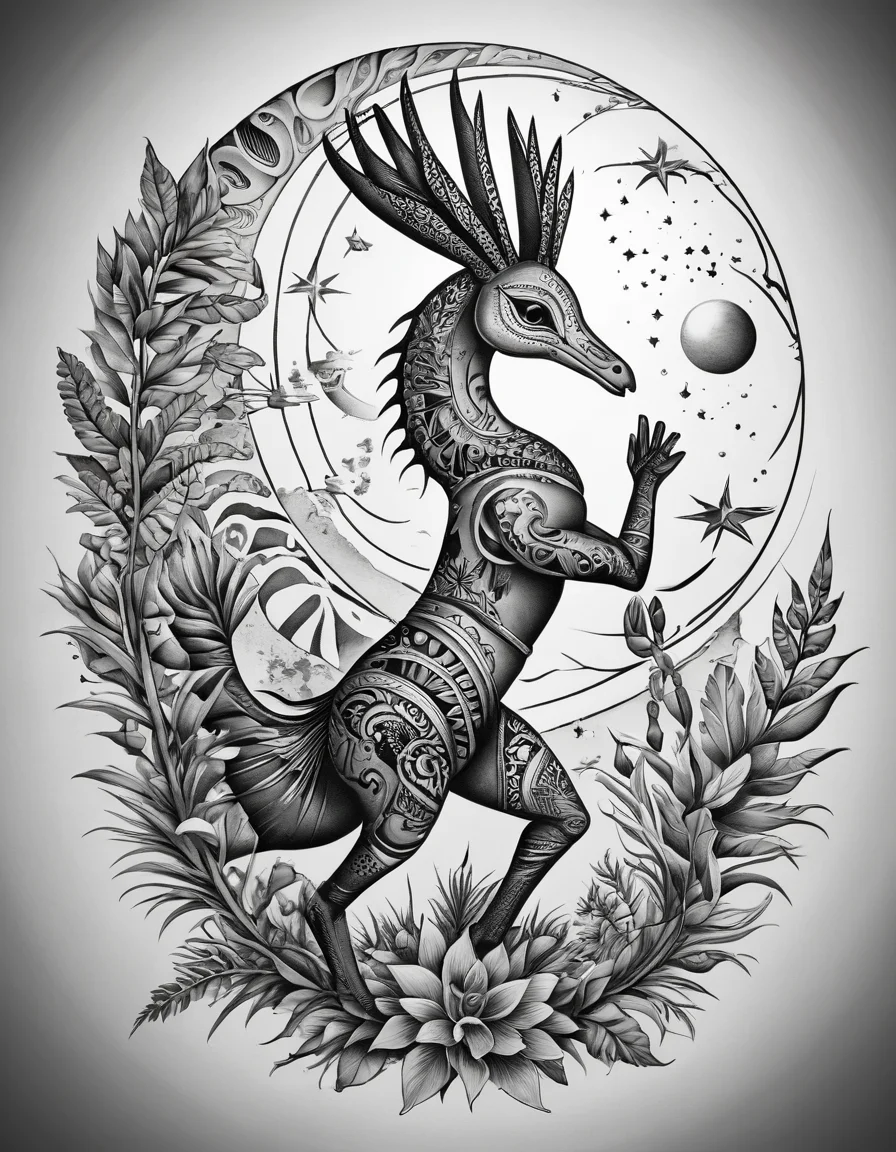
Kokopelli is a self-sufficient symbol, but sometimes its meaning can be enhanced or supplemented by combining it with other elements. This allows for a more complex and multifaceted story on your body. Here are a few ideas:
- Nature Motifs: Sun, moon, stars, clouds, rain, plants (flowers, trees, corn), animals (e.g., lizard, birds) – all these combine beautifully with Kokopelli, emphasizing his connection with nature, fertility, and life cycles. For example, Kokopelli playing a flute under a starry sky can symbolize the harmony of the cosmos and life.
- Musical Instruments: In addition to the flute, other musical instruments can be added, symbolizing creativity and self-expression. These can be drums, a guitar, or even abstract notes.
- Symbols of Fertility: To enhance the meaning of fertility, you can add symbols associated with it in different cultures: a cornucopia, ears of wheat, a pomegranate.
- Indigenous Attributes: Feathers, traditional patterns, headdresses, beads – these elements can emphasize the origin of the symbol and give the tattoo authenticity. It is important to use them with respect for the culture.
- Symbols of Joy and Luck: For example, a spiral (a symbol of eternal movement and development), or other positive symbols that are close to you.
- Abstract Elements: Lines, dots, geometric shapes can add dynamism and a modern feel to the composition.
When creating a composition, it is important that all elements harmonize and do not overload the image. I often advise clients that each additional element should carry a specific meaning or serve to enhance the main idea. You shouldn’t add something just for the sake of beauty if it’s not related to the overall concept. It’s best to discuss combination options with your artist – they will help you choose the most winning combinations, considering the style and size of the future tattoo.
Kokopelli Tattoos: What Mistakes to Avoid When Choosing and Getting One
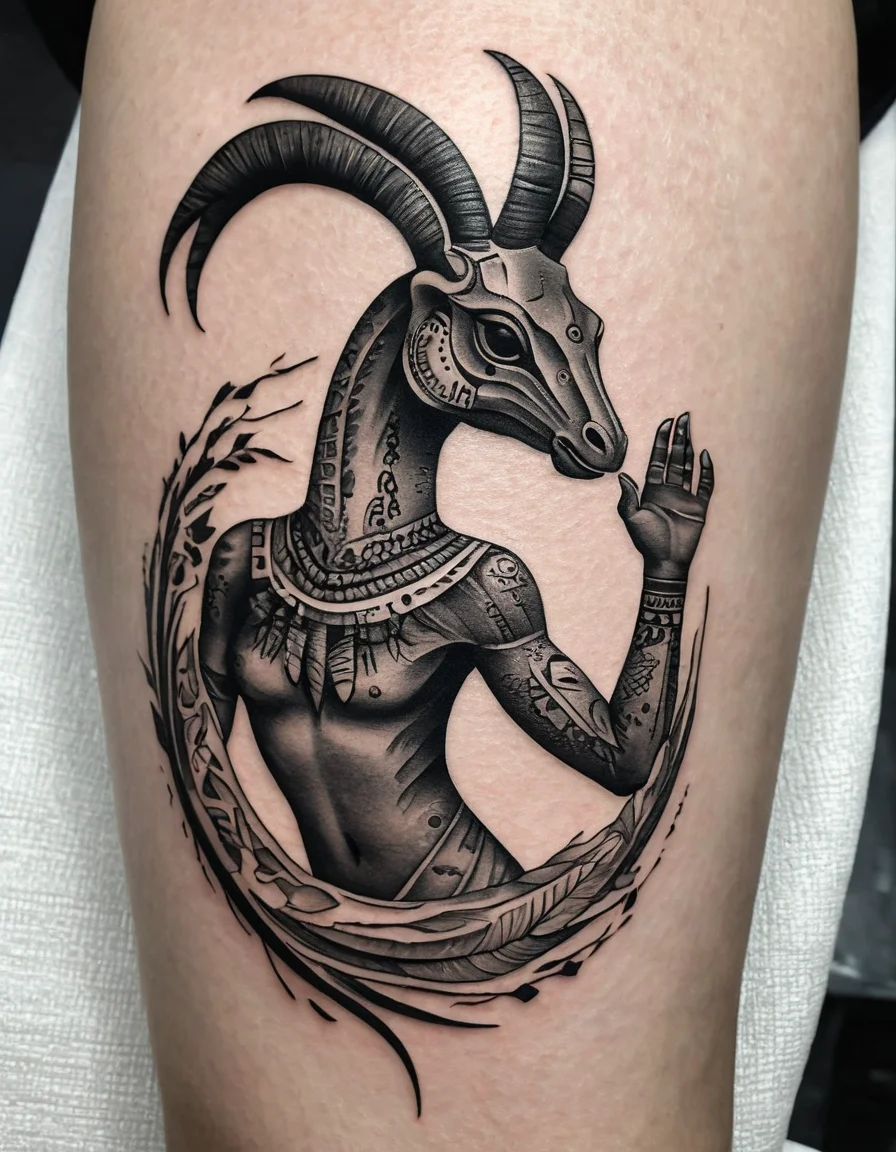
Although Kokopelli tattoos carry a positive and bright meaning, there are a few things to avoid to ensure your tattoo turns out truly successful and brings you joy for many years to come.
- Disrespect for the Symbol: Kokopelli is an important symbol for the indigenous peoples of America. It is important to treat it with respect, avoiding caricatured or distorted images that may seem offensive. Study the history and meaning of the symbol before deciding on a tattoo.
- Incorrect Style Choice: Trying to fit a complex, detailed image into too small a size, or, conversely, making a very large tattoo in a minimalist style, can lead to the drawing losing its expressiveness. Make sure the chosen style matches the size and placement.
- Ignoring Artist Selection: Poor execution can ruin even the most beautiful sketch. Choose an artist who has experience with similar symbols and styles, who can offer you professional advice and guarantee high-quality work. Look at portfolios, read reviews.
- Too Many Details: The desire to fit as much meaning as possible into a tattoo can lead to an overloaded composition. Sometimes a simple, but precise image works better than a complex and convoluted picture.
- Incorrect Placement: A tattoo that will be constantly subjected to friction (e.g., from clothing) or located in an area where the skin stretches significantly may quickly lose its original appearance. You should also consider how the tattoo will look in different situations – will it be visible at work, and does it fit your lifestyle?
- Forgetting the Future: A tattoo is for life. Think about whether you will like this symbol in 10, 20, 30 years. The symbolism of Kokopelli, associated with joy, creativity, and nature, generally remains relevant for most people.
- Not Following Aftercare Instructions: After getting a tattoo, it is very important to care for it properly so that it retains its brightness and clarity. Follow all your artist’s healing recommendations.
I always insist that a tattoo is a conscious choice. Kokopelli is a wonderful symbol that can bring a lot of positivity into your life. The main thing is to approach its choice and application with intelligence, respect, and love. Then your tattoo will be a source of joy and pride for many years to come.