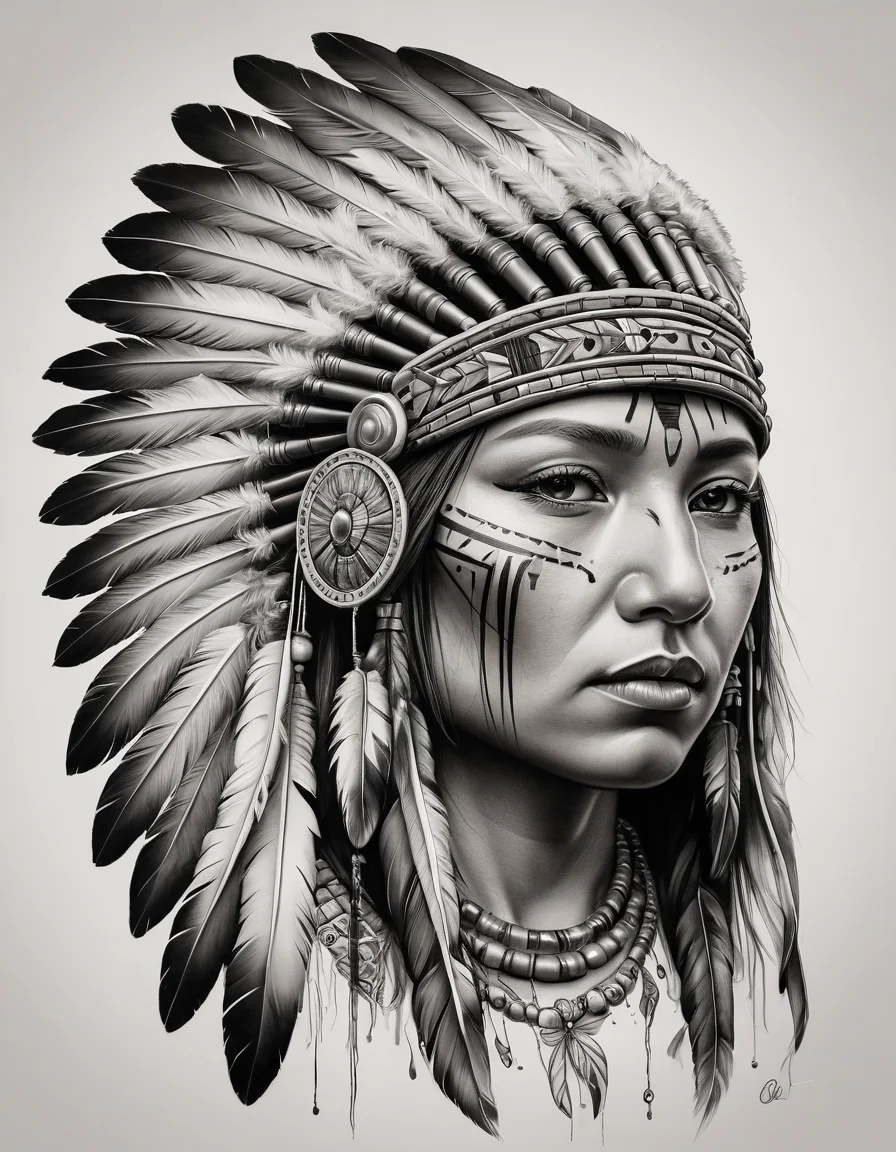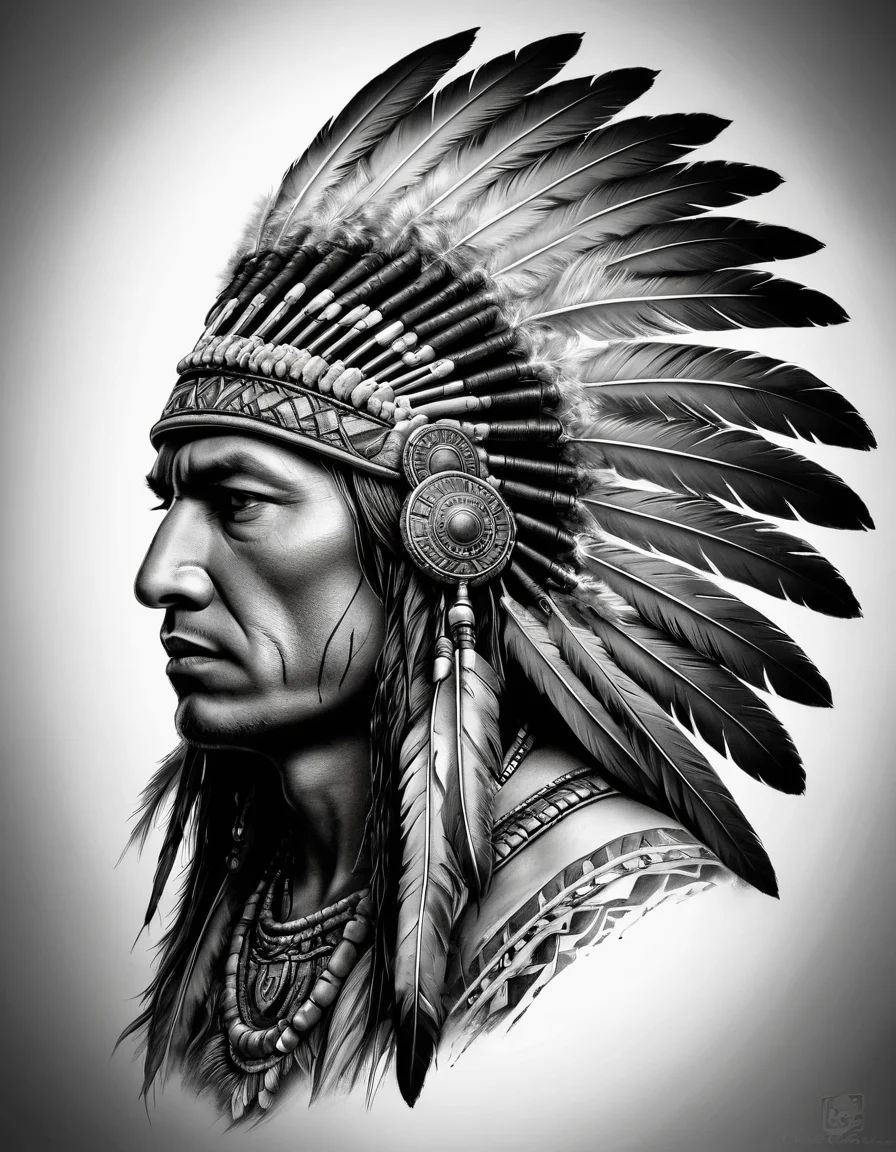
Greetings, dear tattoo enthusiasts and explorers of their deep meanings! Today, we will dive into the amazing world of symbolism embodied by one of the most recognizable and powerful images – the Native American headdress. This tattoo is not just a beautiful drawing; it is a profound symbol with a rich history and numerous meanings. But before we begin, I want to emphasize one crucial point: when working with such a sacred image as a Native American headdress, it is extremely important to approach the process with the utmost respect for the culture whose heritage it represents. This is not just a fashion trend, but a tribute to history, traditions, and the spirit of ancestors. As artists, we are obligated to convey this message to everyone who chooses such a design.
Native American Headdress: A Symbol of Valor and Cultural Respect
When we talk about Native American headdresses, the association most often goes to the Plains tribes. These famous feathered headdresses, known as war bonnets or headdresses, were not just adornments. They were embodiments of status, honor, bravery, and spiritual connection. Each element – a feather, its placement, its color – had its own meaning and told the story of its wearer: about their exploits, wisdom, shamanic abilities, or affiliation with a particular clan. Wearing such a headdress was a privilege earned through exceptional valor, courage, and wisdom. It is a symbol of a leader, a warrior, a protector, a person whose life was filled with service to their tribe and people. This is precisely why a tattoo depicting a Native American headdress typically carries these same connotations: strength, courage, steadfastness, a deep connection with nature and ancestors.
The History and Meaning of Native American Headdresses: From Tribe to Symbol
To truly understand the meaning of the tattoo, one must turn to its origins. Native American headdresses are a complex system of symbolism that varied from tribe to tribe. For example, among the Sioux, Cheyenne, and Arapaho tribes, headdresses could indicate a chief’s rank, his achievements in battle or hunting. Eagle feathers, which were the most sacred, could only be worn by those who had performed specific heroic deeds, confirmed by witnesses. Every warrior who earned the right to wear such an adornment underwent a special ritual. The colors of the feathers also had meaning: red could symbolize blood, battle, or the life force, while white represented purity, spirituality, or peace. In some cultures, the headdress was also used for ritualistic purposes, serving as a bridge between the human world and the spirit world. For a tattoo, this means the image can carry not only a person’s individual qualities but also their aspiration for spirituality, protection, the search for their path, and a connection with ancient traditions. It is important to understand that this is not just a headdress, but part of a sacred regalia that bestows strength and authority upon the wearer. Therefore, by choosing such a tattoo, you take on a certain responsibility – to bear this symbol with dignity.
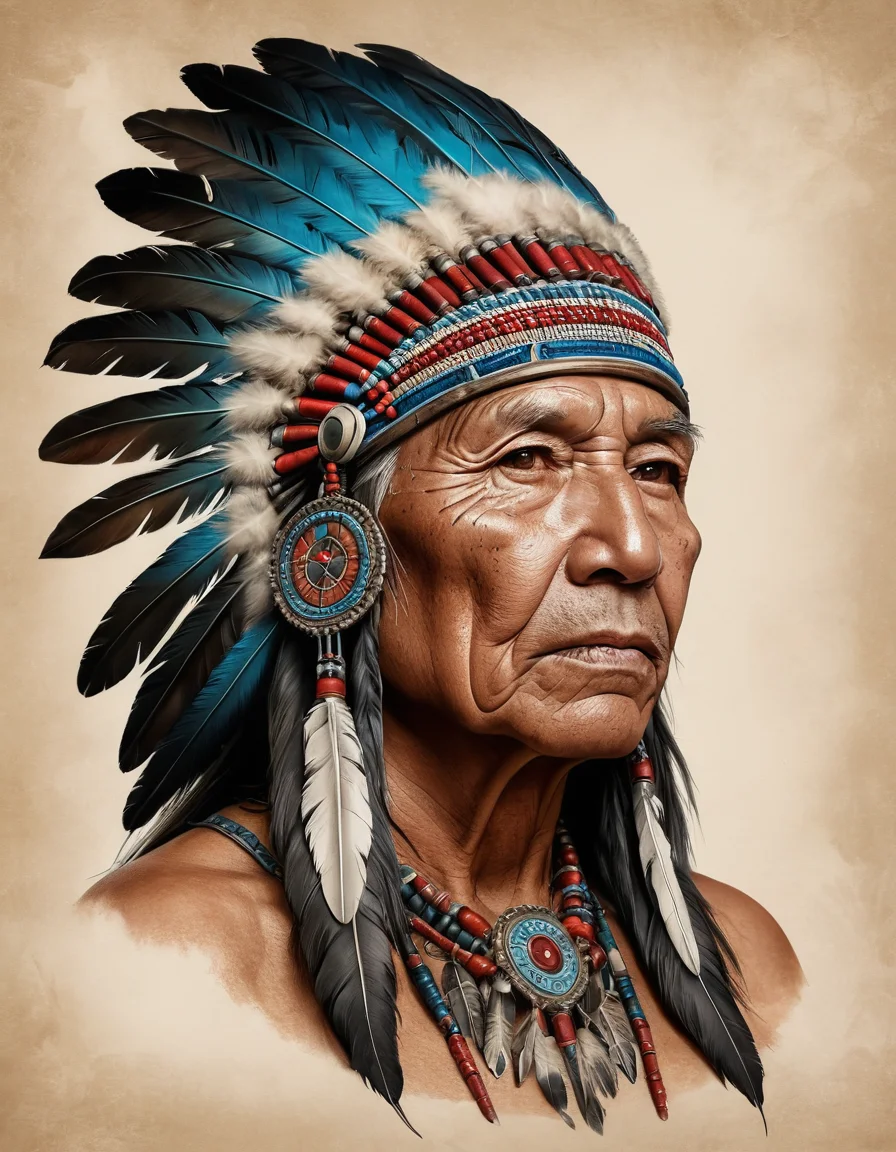
Visual Variations and Styles: How to Depict a Native American Headdress Tattoo
Today, Native American headdress tattoos are created in a wide variety of styles, each lending a unique nuance to the image. Let’s look at the most popular ones:
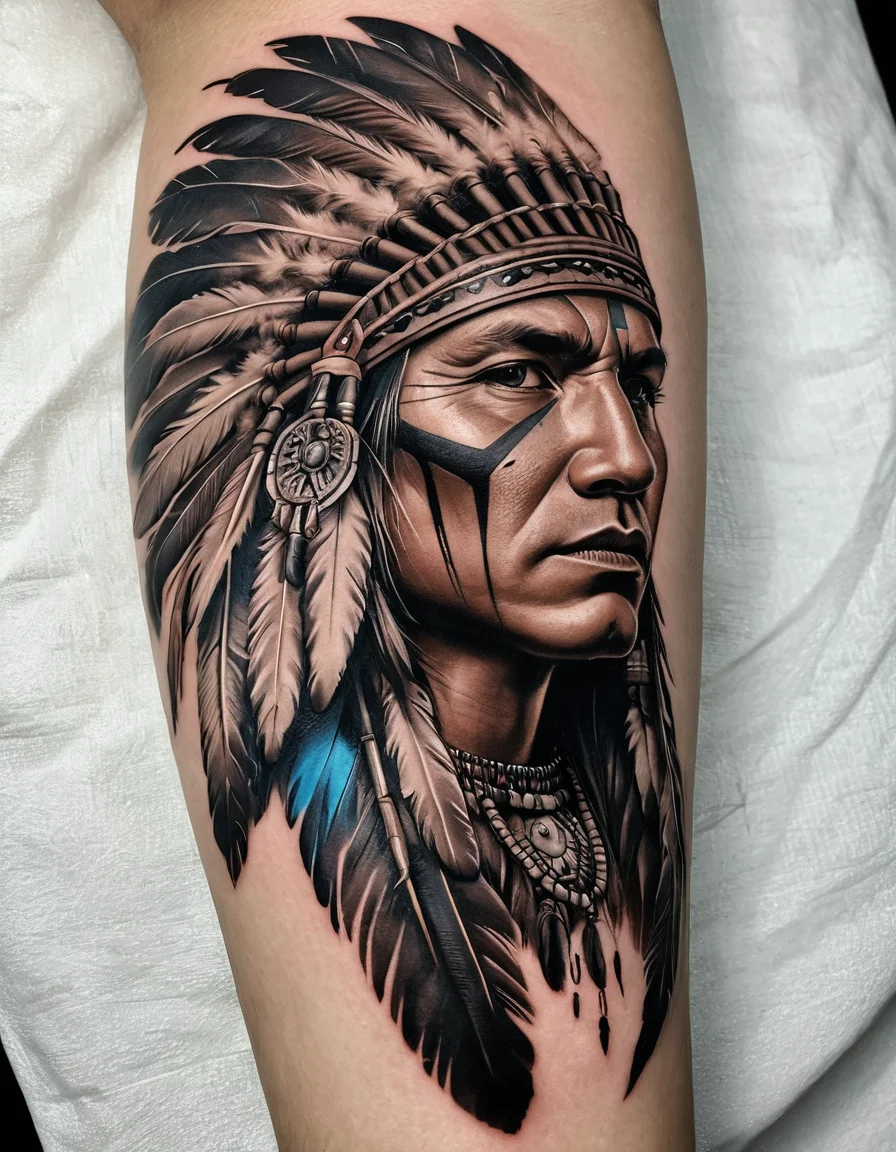
- Realism: This style allows for the most accurate rendering of the headdress’s details – the texture of the feathers, their curves, the play of light and shadow, as well as facial expressions if a portrait is included. A realistic depiction of the headdress emphasizes its grandeur, naturalness, and connection to the real world, making the symbol particularly powerful.
- Traditional (Old School/American Traditional): Bright colors, bold outlines, and stylized elements are characteristic of this style. The headdress here may appear more cartoonish but still retains its symbolism. This style is often chosen for its boldness and eye-catching nature.
- Neo-Traditional: A more modern interpretation of the traditional style, combining it with elements of realism and a more complex color palette. Tattoos in this style look very striking and dynamic.
- Geometric/Linework: Here, the headdress can be represented by clean lines, geometric shapes, and abstract patterns. This is a minimalist yet very stylish approach that emphasizes structure and symbolism by removing excessive detail.
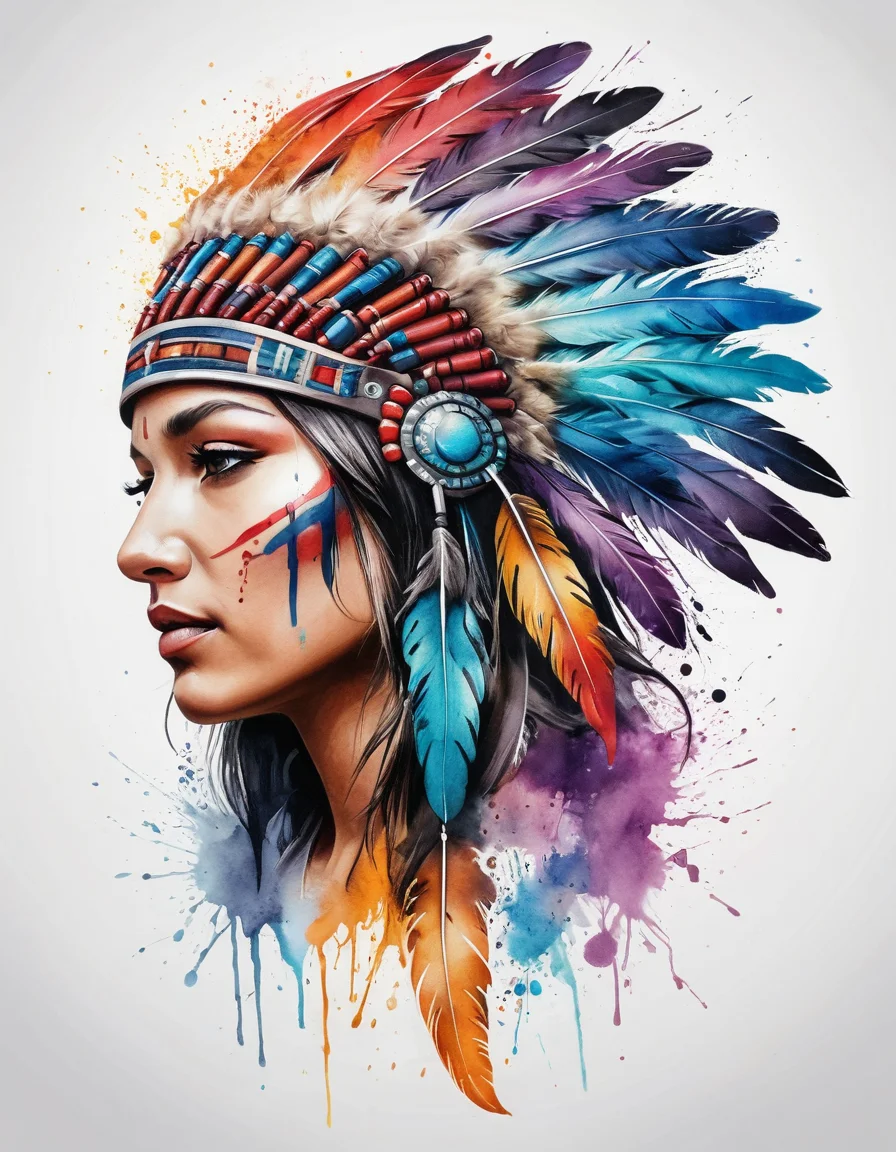
- Watercolor: Soft color transitions and blurred outlines create the effect of a watercolor painting. Tattoos in this style look delicate and airy, giving the symbol a more artistic and light interpretation.
- Dotwork: A technique that uses dots to create an image. A headdress rendered in dotwork can look very exquisite and detailed, with soft shading and volume.
The choice of style depends on your personal taste and the mood you want to convey with the tattoo. Realism is suitable for those who want to emphasize grandeur and detail. Geometric is for lovers of minimalism and modern solutions. And watercolor is for those seeking something lighter and more artistic. I often advise clients to look at examples of work in different styles to understand which approach resonates with them most. Don’t be afraid to experiment, but always remember the main thing – respect for the symbol.
Native American Headdress Tattoo for Men: Symbolism of Strength, Leadership, and Protection
For men, a Native American headdress tattoo often becomes an embodiment of qualities such as strength, bravery, leadership, protection, and courage. It is the choice of those who seek to emphasize their inner power, resilience of spirit, and readiness to take responsibility. Historically, headdresses were worn by chiefs and the bravest warriors, so such a tattoo can symbolize the aspiration to achieve high status, respect in society, and the ability to lead others. It can also be a sign of a deep connection with nature, the earth, and a feeling of being part of something larger than individual existence. Men who choose this symbol often want to visualize their inner will, their ability to overcome difficulties, and remain true to their principles. Sometimes, such a motif can also carry a more personal meaning – a memory of ancestors, a connection to lineage, a heritage that a person cherishes. It is important for the wearer to feel this connection and understand the depth of the chosen symbol.
Native American Headdress Tattoo for Women: Elegance, Connection to Nature, and Spirituality
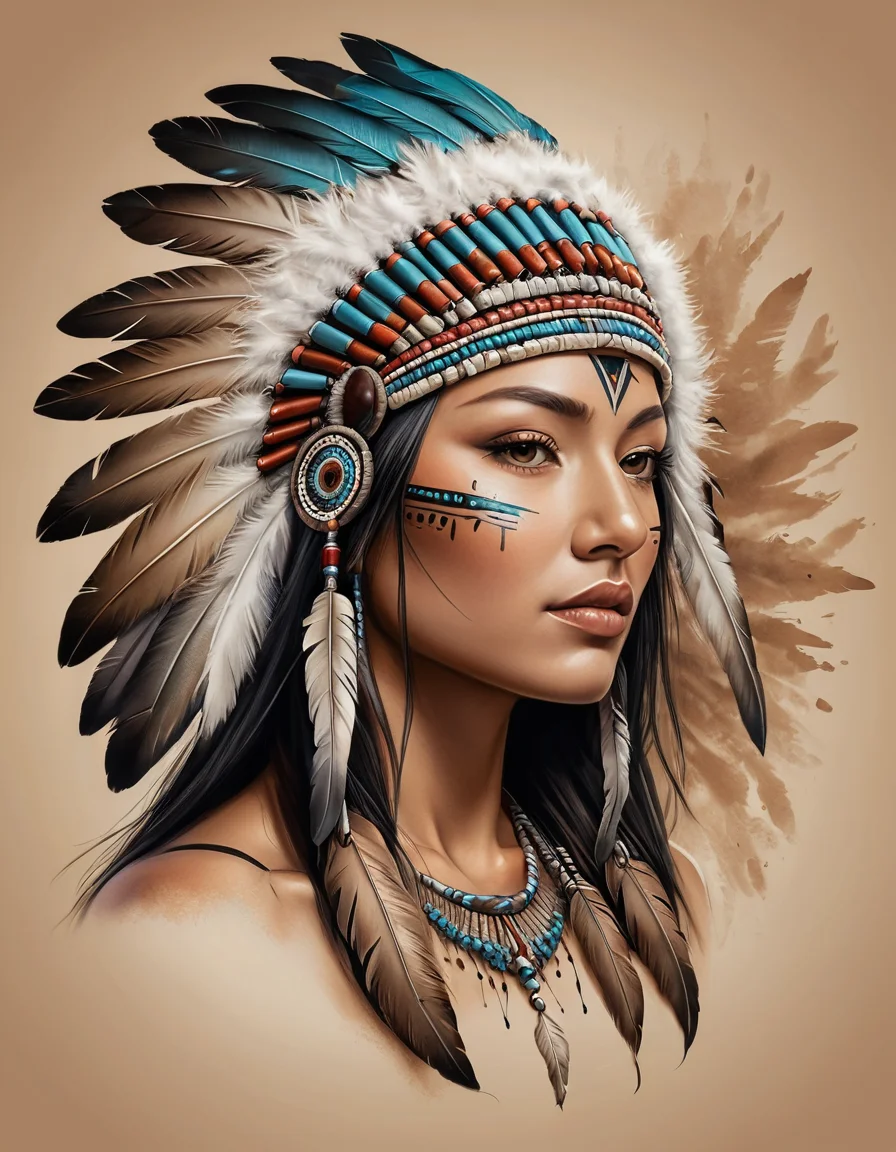
Although the headdress is traditionally associated with male symbolism, for women, it can also carry a deep and multifaceted meaning. Women who choose such a tattoo often want to emphasize their inner strength, independence, connection to nature, and spiritual world. It can be a symbol of feminine power, which manifests not in aggression, but in wisdom, intuition, and resilience. The headdress can symbolize a connection to the earth, natural cycles, and the aspiration for harmony with the surrounding world. For many, it is a sign of a spiritual journey, the search for truth, a connection with ancestors or higher powers. Such a tattoo can speak of strong intuition, insight, and the ability to see the essence of things. In the modern world, where the boundaries of traditional roles are blurring, a Native American headdress tattoo for women becomes an expression of their individuality, strength of character, and inner beauty, which can be no less, and sometimes more powerful, than physical beauty. It is the choice of those who value freedom, self-expression, and seek harmony between the external and internal worlds.
Choosing a Tattoo Location: Best Areas for a Headdress and Their Symbolic Meaning
The location where you decide to get a tattoo plays no less a role than the design itself. It can enhance or complement the symbol’s meaning. Let’s consider the most popular options:
- Forearm: A classic choice. On the forearm, the headdress will be clearly visible, symbolizing openness and readiness to display one’s strength and beliefs. It can be a standalone tattoo or part of a larger composition.
- Shoulder/Bicep: This area is often associated with strength and power, which perfectly aligns with the symbolism of valor and leadership that the headdress carries. A tattoo here looks impressive and harmonious.
- Back: The large area of the back allows for the creation of a truly epic work of art. The headdress can be part of a larger compositional concept, including other symbols or landscapes. Symbolically, the back can represent support, protection, connection to the past, or backing.
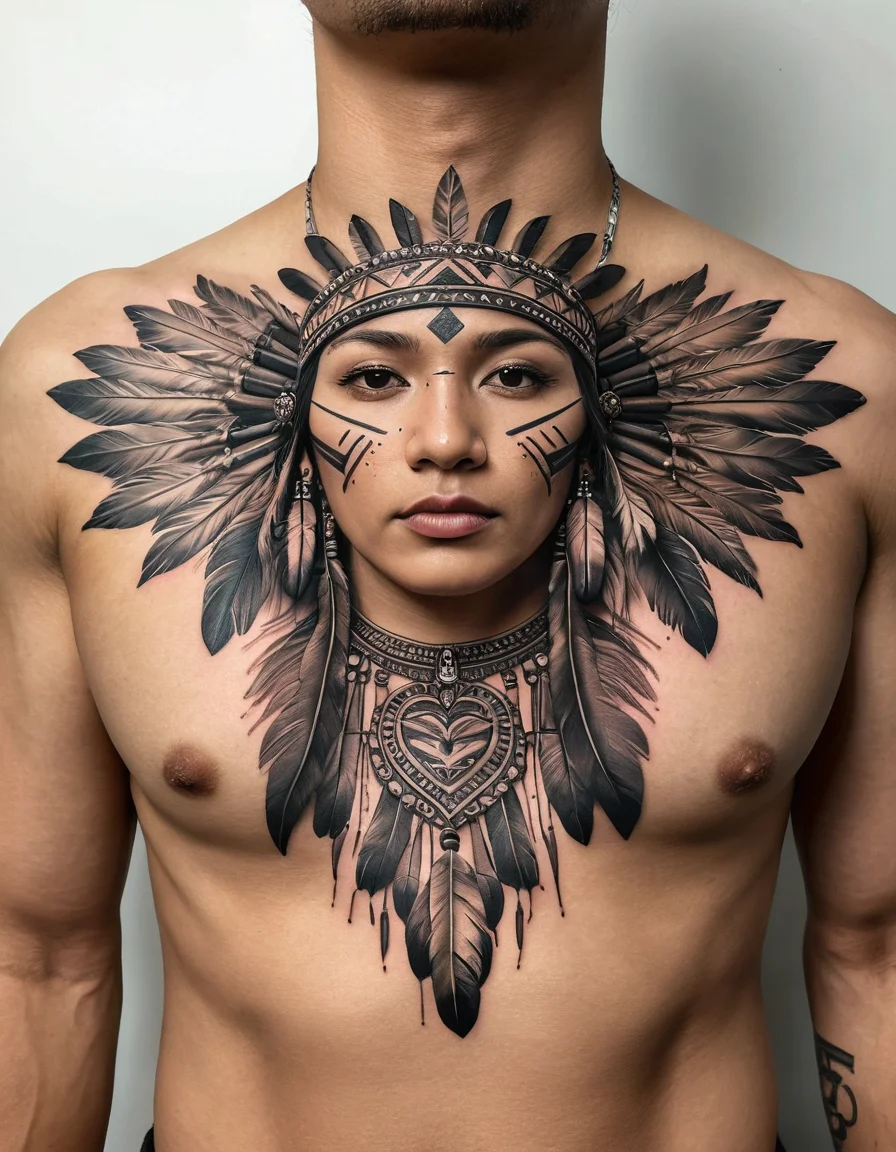
- Chest: A tattoo on the chest, especially closer to the heart, can have a very personal, deep meaning. A headdress placed here can symbolize the preservation of honor, loyalty, and inner convictions.
- Calves/Shins: These areas are also often chosen by men, emphasizing a connection to the earth and the path they are walking. A tattoo on the calf may be less visible but no less significant to its wearer.
- Nape of the Neck: A bolder choice, symbolizing the protection of the head, wisdom, and the spiritual principle. Such a tattoo requires special care and thoughtful consideration.
When choosing a location, I always advise trying on the design on the body, seeing how it looks in motion, and how it complements your anatomy. Also, consider how visible or hidden you want your tattoo to be. Some people prefer their symbols to be visible to everyone, while others prefer them to remain a more personal, intimate message.
Harmony of Symbols: What Tattoos Complement a Native American Headdress
A Native American headdress tattoo looks great on its own or in combination with other symbols that can deepen or complement its meaning. Here are a few popular combinations:
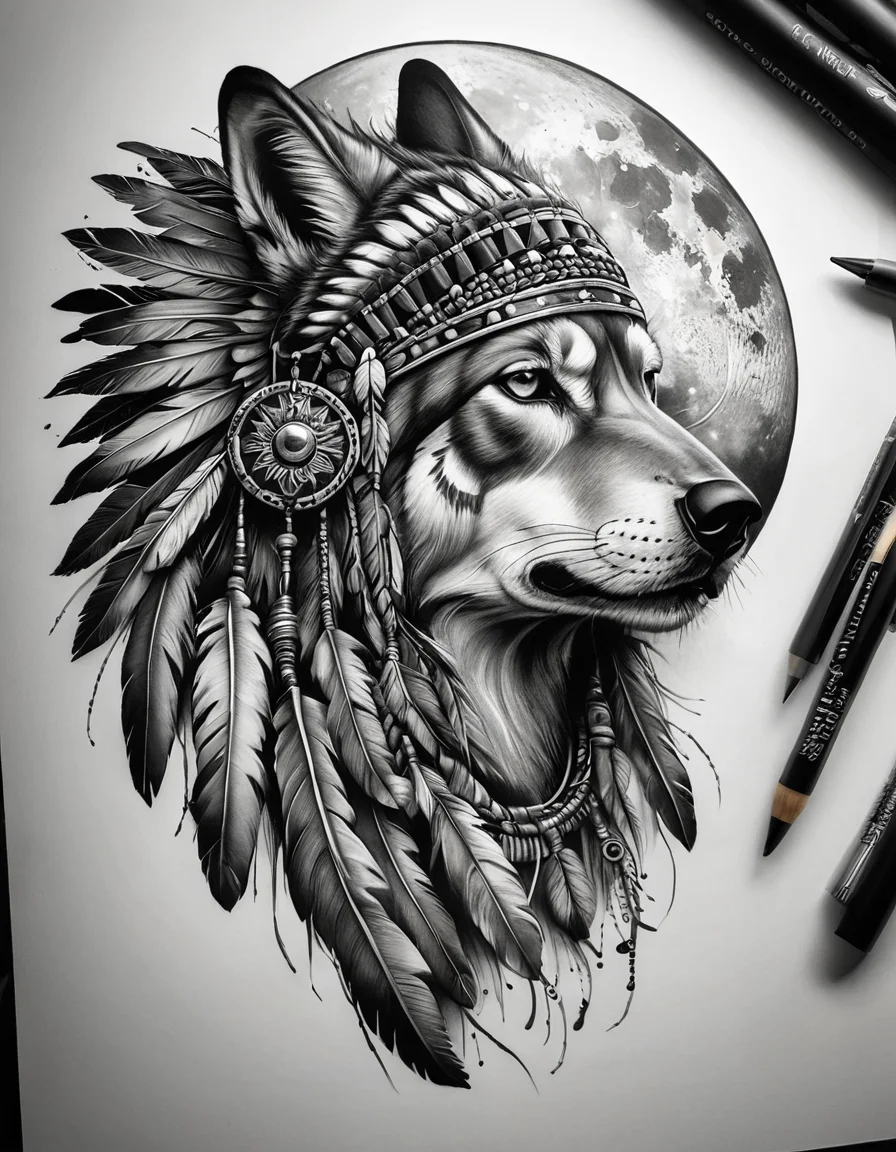
- Animals: Wolves, eagles, bears, snakes – these animals often have special significance in Native American cultures and can complement the symbolism of the headdress. A wolf can symbolize pack loyalty, cunning, and strength; an eagle – freedom, spirituality, connection to the sky; a bear – strength, wisdom, protection.
- Nature: Mountains, forests, rivers, sun, moon – these elements emphasize a connection with nature and harmony with the surrounding world, which is an important part of Native American culture.
- Weapons: Arrows, bows, spears can symbolize protection, focus, and readiness for action. A single arrow is a symbol of resilience, while a quiver of arrows represents unity and strength.
- Patterns and Ornaments: Traditional Native American patterns, such as diamonds, spirals, and zigzags, can be integrated into the design, adding authenticity and depth.
- Portraits: An image of an elder, a warrior, or an animal alongside the headdress can create a powerful narrative, conveying the spirit of ancestors or the strength of a particular totem.
When creating a composition, it is important that all elements harmonize with each other, both in style and meaning. Do not overload the tattoo with unnecessary details. Sometimes less is more. It is better to have one or two symbols that truly resonate with you than many that have lost their meaning.
What to Avoid: Taboos and Mistakes When Choosing a Native American Headdress Tattoo
When working with symbols that have deep cultural roots, it is especially important to remember what to avoid to prevent disrespect or distortion of their true meaning. Here are a few key points:
- Mindless Copying: Do not choose a design simply because it looks “cool.” Try to learn as much as possible about the symbolism carried by this specific type of headdress, tribe, feathers, and colors. The image may have a very specific meaning that you do not want to bear.
- Misuse of Sacred Elements: Certain elements, such as specific patterns, colors, or types of feathers, may be sacred and have strict rules of use within tribal culture. Incorrect or inappropriate application can be perceived as an insult.
- Excessive Stylization and Distortion: While stylization is normal for tattoo art, it is important that the basic elements retain their recognizability and respectful attitude towards the original. Complete distortion of form or meaning can strip the tattoo of its original power.
- Ignoring Consultation with the Artist: An experienced artist working with such themes will always advise on how best to convey respect for the culture and how to avoid mistakes in composition and symbolism. Do not hesitate to discuss all details and ask questions.
- Using the Image for Self-Aggrandizement Without Understanding: A headdress tattoo is a symbol of achievement, wisdom, and honor. To wear it without having real merits or aspirations for them can be perceived as insincerity or even boastfulness.
Remember that a tattoo is not just an adornment; it is part of your story, your message to the world. This is especially true when it comes to such significant and sacred symbols. Approach your choice with wisdom, respect, and awareness.